
LIECHTENSTEIN RESIDENCE CARD
Liechtenstein Residence Card – Why It Matters
Stay, work, and build your future in Liechtenstein with the right residence documentation. A Liechtenstein residence permit helps prove your legal stay, residence status, and permission to live and work in the Principality for employment, family, or long-term purposes. Liechtenstein is part of the EEA and the Schengen Area but not the EU, and it operates a strict quota system, so learn about Liechtenstein residence permit eligibility, required documents, application steps, renewal rules, work rights, and country-specific guidance before starting your residence process.
- Legal Stay in Liechtenstein
- Work & Residence Rights
- Residence Card Requirements
- Renewal & Document Guidance

Liechtenstein Residence Permit: Types, Requirements and How to Apply
If you plan to live and work in Liechtenstein for more than three months, you need a Liechtenstein residence permit — the document that establishes your legal residency in the Principality. But Liechtenstein is unlike almost anywhere else in Europe: it runs one of the continent’s most restrictive quota systems, and even citizens of the EEA are not guaranteed a permit. This guide explains the permit types, the quota and lottery, who qualifies, the documents you need, how to apply through the Migration and Passport Office, the fees, and why most people who work here actually commute across the border rather than living in the country.
In short, Liechtenstein issues only a small fixed number of residence permits each year, half of them allocated by lottery, so many workers use the cross-border commuter permit from Switzerland or Austria instead. Liechtenstein is in the EEA and the Schengen Area but not the EU, uses the Swiss franc, and shares a close administrative and border relationship with Switzerland. Citizenship takes an exceptional thirty years, and dual nationality is not allowed.
What is a Liechtenstein residence permit?
A Liechtenstein residence permit is an official authorisation allowing a foreign national to live in the Principality, since any stay beyond a three-month visit requires a permit. It is issued by the Migration and Passport Office (Ausländer- und Passamt), part of the Liechtenstein National Administration, and the resident receives an ID card confirming their status. Liechtenstein is a member of the EEA and the Schengen Area but is not an EU member, and it uses the Swiss franc. A defining feature is the quota: residence permits are granted only in strictly limited numbers each year. Because Liechtenstein is in the Schengen Area, the card allows short-stay travel across the Schengen Area, and its border and customs union with Switzerland shape how entry works in practice.
Types of residence permits in Liechtenstein.
Liechtenstein’s main permit categories are:
- Residence (B) permit: for longer-term residence, issued annually and renewed each year, for gainful employment or, for those with means, without employment.
- Short-term (L) permit: for employment of limited duration, typically up to twelve months, for project-based or fixed-term roles.
- Cross-border commuter (Grenzgänger) permit: for people living in Switzerland or Austria who commute to work in Liechtenstein — the most widely used route.
- Settlement (C) permit for long-term residents, reached after many years.
Swiss citizens have a special, broader category than most foreign nationals.
Who can apply?
The rules differ sharply by nationality. EEA nationals have the right to apply but not to receive a permit, because they compete for a small annual quota. Swiss citizens have their own, more generous allocation. Non-EEA (third-country) nationals face the strictest rules of all: Liechtenstein has no obligation to grant them a permit, and they are generally admitted only if employed as managers, specialists or qualified workers with completed studies or long professional experience, or as significant investors serving the national interest. In all cases, you need a valid passport, secure means of travel, accommodation, health insurance, and a clean record. The route you qualify for depends first on your nationality.
Do you need a visa first?
Although Liechtenstein is in the Schengen Area, it has no international airport or consular network of its own. It cooperates closely with Switzerland’s border regime. Hence, non-EEA nationals typically need a Swiss national (D) visa to enter, with the Migration and Passport Office coordinating with the Swiss authorities. EEA nationals who take up employment must register with the Migration and Passport Office within ten days of starting work. The permit or quota allocation must generally be secured before you settle. Confirm your entry and visa requirements before you travel.
Documents you need
Prepare a complete, well-organised package — the authorities assess applications rigorously:
- A valid passport with copies of used pages
- A signed employment contract with a Liechtenstein employer
- Proof of accommodation in Liechtenstein (for residents, as opposed to cross-border commuters)
- A police clearance certificate
- Proof of health insurance
- For non-EEA applicants, evidence of qualifications and, where relevant, the employer’s recruitment record
Foreign documents may need translation and legalisation. Confirm the current checklist with the Migration and Passport Office before submitting.
Establish your legal purpose and the quota.
Liechtenstein grants roughly seventy-two new residence permits to EEA nationals each year — about fifty-six for gainful employment and sixteen without — with half allocated by a lottery drawn twice a year, in spring and autumn, and half by government selection based on economic need, plus a separate allocation for Swiss citizens. For non-EEA nationals, there is no fixed quota; permits are discretionary and rare. For employment, a statutory priority test applies: the employer must document genuine efforts to recruit from the domestic, EEA and Swiss labour markets before turning to a non-EEA candidate. The purpose must be genuine and documented.
The lottery and the cross-border alternative
Because the residence quota is so small, the practical reality is that most of Liechtenstein’s private-sector workforce — including in its large manufacturing sector — is cross-border commuters. The Grenzgänger permit, for people who live in Switzerland or Austria and commute daily or weekly, is not subject to the main residence quota, which makes it far more accessible than a residence permit. The Migration and Passport Office issues it for one year, ties it to the employer, and requires labour market testing for non-EU and EFTA nationals. For many workers, this is the only realistic route.
How to get a residence permit in Liechtenstein, step by step
- Secure a job offer from a Liechtenstein employer, or confirm your means for a non-employment permit.
- Identify your route — residence permit within the quota or cross-border commuter permit.
- For the EEA lottery, submit the application for the draw and pay the preliminary fee before the deadline.
- If drawn or selected, submit the full application with supporting documents to the Migration and Passport Office.
- For non-EEA nationals, obtain a Swiss national (D) visa to enter.
- Enter Liechtenstein and complete registration.
- Collect your residence ID card.
- Renew annually, keeping your job, address and cover in order.
Processing time
For EEA and Swiss nationals applying for gainful employment, a decision on a complete application is usually taken within about four weeks of receipt, while for non-EEA nationals, decisions are usually taken within about three months. The lottery, however, follows its own calendar, with draws held twice a year, so timing can depend heavily on the quota cycle rather than on how quickly you file. Incomplete applications cause delays, so prepare thoroughly and renew in good time each year.
Government fees and costs
For the EEA lottery route, the fees include a preliminary draw participation fee of CHF 100 and, if drawn, a final draw participation fee of CHF 500, with the permit issuance fee of CHF 1,060 payable on approval and CHF 80 if an application is rejected. For gainful-employment applications, a positive decision costs CHF 1,060 and a negative one CHF 80. Add health insurance and any translation costs. Pay only through official channels and keep every receipt. Fees are updated periodically, so confirm the current schedule before you pay.
Validity and renewal
The residence (B) permit is issued annually and must be renewed each year, while the short-term (L) permit covers employment of limited duration, typically up to twelve months. The cross-border commuter permit is likewise issued for one year and renewed. Because permits are short and renewed frequently, keeping your employment, address and health cover continuously in order is essential, and any lapse in status is taken seriously. File your renewal in good time each year to keep your right to live and work in the Principality.
Changing employer or purpose
Permits in Liechtenstein are tied to your employer and the basis on which they were granted. Hence, changing employer generally requires the authorities’ involvement and a permit reflecting the new job, and for non-EEA nationals a fresh assessment against the admission rules. Moving from employment to non-employment status, or vice versa, constitutes a change of purpose. The cross-border commuter permit is also employer-tied. Always keep your work and residence documents aligned, because working outside the terms of your permit can end your right to remain.
Benefits of holding a permit
A valid permit gives you legal residence in one of the world’s wealthiest and most stable countries, with very high wages — average monthly earnings well above those in most of Europe — low unemployment, and a low, flat national income tax supplemented by a municipal rate. Because Liechtenstein is in the Schengen Area, your card also allows short-stay travel across other Schengen countries. Residents join the compulsory health-insurance system, and family members can join you. The trade-off is that securing residence in the first place is exceptionally difficult.
Family reunification
A residence permit holder may apply for family reunification for a spouse and children under the age of 21, with each family member requiring a separate application. Swiss and EEA citizens holding a residence permit may have their family members join them at any time. The family must generally show sufficient means and accommodation. Since this process ties into the wider permit system, please confirm the current conditions with the Migration and Passport Office before applying, as places and rules are limited.
Pathway to permanent residence and citizenship
Certain residents may apply for a settlement (permanent) permit after five years of continuous residence. However, this depends heavily on the permit type and nationality, with much stricter conditions for non-EEA nationals. Liechtenstein citizenship is exceptional: naturalisation generally requires thirty years of residence, with years spent under the age of twenty counted double, or shorter routes by long marriage to a citizen or by a municipal citizens’ vote, and Liechtenstein does not permit dual nationality, so you must relinquish your prior citizenship. See our Liechtenstein citizenship guide.
For professional drivers in Liechtenstein
An honest note for drivers: Liechtenstein is a tiny alpine microstate of around 39,000 people covering just 160 square kilometres, with no airport and no seaport, and only a domestic road network connecting to Switzerland and Austria. It has a strong, high-value manufacturing sector, but almost no independent road-haulage industry of its own — Swiss and Austrian carriers largely handle freight, and most of the workforce commutes in from across the border. On top of that, residence is governed by one of Europe’s most restrictive quota and lottery systems. For the great majority of workers, the realistic route is the cross-border commuter permit from Switzerland or Austria, not residence. In plain terms, Liechtenstein is not a driver destination in any conventional sense, and anyone considering it should look first at the neighbouring countries.
- Browse driver vacancies in Liechtenstein.
- Register a driver profile.
- For employers — hire international drivers with compliance support
Residence permits by the Liechtenstein municipality.
Liechtenstein has eleven municipalities. The process is the same everywhere — the quota and the Migration and Passport Office govern residence nationwide — but here is what each municipality is known for.
Vaduz
The capital and financial centre, seat of government and the banking sector, and the administrative heart of the Principality. Driver jobs in Vaduz.
Schaan
The largest municipality by population and the main industrial centre, home to major manufacturing employers and the busiest commercial activity. Driver jobs in Schaan.
Triesen
A southern municipality with a significant industrial estate and manufacturing, generating the local goods transport there. Driver jobs in Triesen.
Balzers
The southernmost municipality, with industry including a well-known surface-coating plant, is near the Swiss border crossing. Driver jobs in Balzers.
Eschen
A commercial centre of the lowland Unterland region, with retail, services and light industry. Driver jobs in Eschen.
Mauren
A lowland Unterland municipality with residential and light commercial activity near the Austrian border. Driver jobs in Mauren.
Triesenberg
A mountain municipality above the Rhine valley, historically a Walser settlement, with tourism and Alpine character. Driver jobs in Triesenberg.
Ruggell
The northernmost municipality, known for its nature reserve and lowland setting near the Austrian and Swiss borders. Driver jobs in Ruggell.
Gamprin
A small lowland Unterland municipality, including the Bendern area, with a Rhine crossing to Switzerland. Driver jobs in Gamprin.
Schellenberg
A small Unterland municipality on a hill in the north, largely residential and rural. Driver jobs in Schellenberg.
Planken
The smallest municipality by population, a mountain village above Schaan with a quiet, residential character. Driver jobs in Planken.
Related guides
- Europe residence permits — all countries
- Liechtenstein citizenship
- Health insurance in Liechtenstein
- Liechtenstein short-stay visa
Official government sources
- Migration and Passport Office (Ausländer- und Passamt) — residence permits.
- Government of the Principality of Liechtenstein — official information.
- Swiss State Secretariat for Migration — entry visas.
- European Free Trade Association — EEA free movement.
Information only — not legal advice. The Liechtenstein authorities make final decisions, and rules and fees can change without notice. Always verify on the official portals above before you apply or pay anyone.
Drive Vaduz. Stay Legally. Belong.
A residence card is one of the key documents for building a legal life in Vaduz, Liechtenstein — and for foreign professional drivers, it is more than just an identity document. It helps confirm your legal status, supports your work and residence rights, and allows you to continue your employment, renew your permits, and plan your long-term future with confidence.
FastDriver explains what a residence card means in Vaduz, when foreign drivers and workers may need it, how it connects with the quota system and the cross-border commuter route, and which documents may be required — with clear Liechtenstein-specific guidance, no shortcuts, and no false promises.
Liechtenstein Residence Permit Questions, Answered
Thinking about living or working in Liechtenstein? Find clear answers to the most common questions about Liechtenstein residence permits, including eligibility, application process, required documents, renewal, family reunification, permanent residence, and citizenship. Always check the latest requirements with the official Liechtenstein authorities before applying.- Liechtenstein residence permit questions, answered.
- What is a Liechtenstein residence permit?
- Why is it so hard to get?
- Is Liechtenstein in the EU?
- Do professional drivers qualify?
- What is a cross-border commuter permit?
- What is the residence quota?
- How does the lottery work?
- Can non-EEA nationals get a permit?
- Do I need a visa first?
- What is the priority test?
- What documents do I need?
- How long does it take?
- How much does it cost?
- How long is the permit valid?
- Can I change employer?
- Can I bring my family?
- Does the permit allow travel in Europe?
- What are the taxes like?
- When can I get permanent residence?
- When can I apply for citizenship?
- Does Liechtenstein allow dual citizenship?
- Do I need health insurance?
- Why do most workers commute instead?
- What is a settlement permit?
- Where do I apply officially?
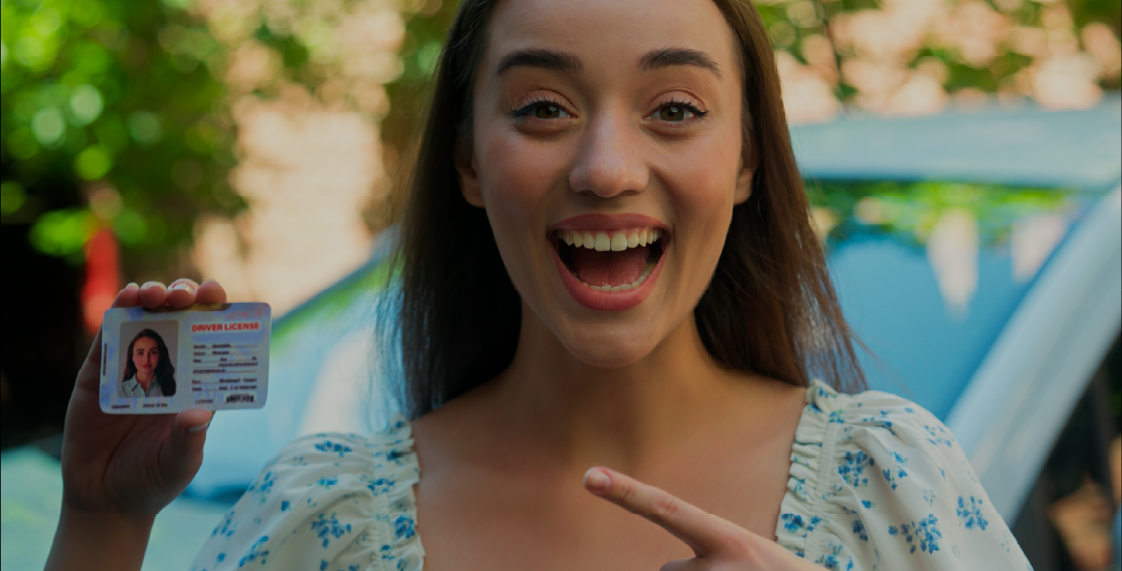
Liechtenstein Health Insurance – A Legal Requirement
Health insurance is compulsory in Liechtenstein, and applicants must show valid cover as part of the residence process, with residents joining the mandatory health-insurance system. Arranging appropriate cover during your move helps you meet the conditions of the residence process.
Read Guide
Last Updated: July 10, 2026
This content is reviewed and updated periodically to maintain accuracy and relevance.
