
Guide
Complete Switzerland Truck Driver Guide for Foreign Drivers
Get clear, honest information about Switzerland truck driver jobs: why non-EU/EFTA work permits rarely fit drivers, how the EU/EFTA free-movement route works, the CZV certificate (Swiss Code 95), licence exchange and legal compliance.
Switzerland pays the highest driver wages in Europe but keeps its labour market almost entirely EU/EFTA-only, so this guide shows you the realistic path.
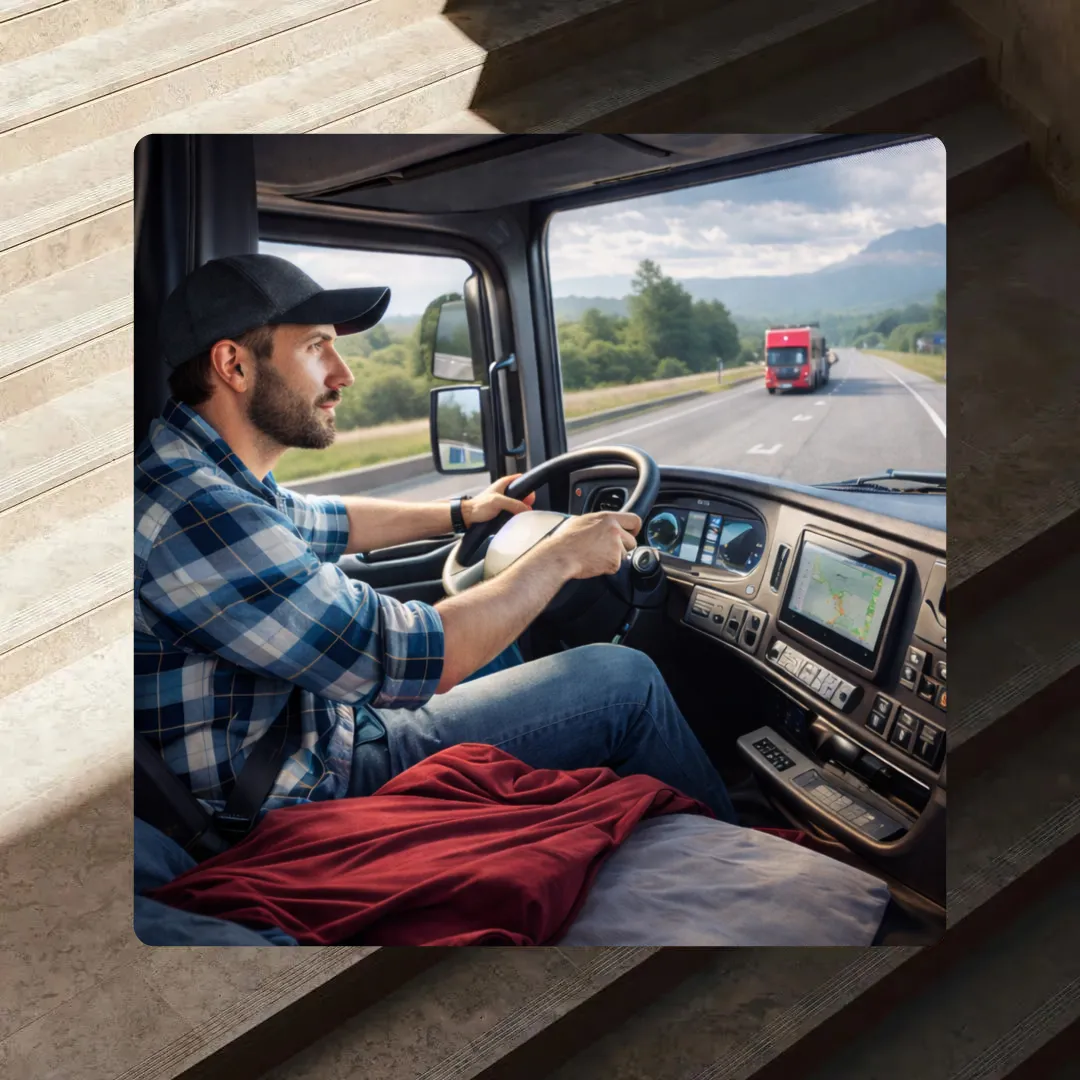
Complete Switzerland Truck Driver Guide for Foreign Drivers
Switzerland pays the highest wages to drivers in Europe, and its transport sector genuinely needs people. But we owe you the honest headline first: for most non-EU drivers, Switzerland is effectively closed as a direct destination. Work permits for third-country nationals are capped by small annual quotas and reserved for managers, specialists and other highly qualified workers, with strict priority for Swiss and EU/EFTA candidates. A driving job rarely clears that bar. The realistic path runs through the EU first — and this guide shows you how.
How the Swiss System Works
Switzerland is not in the EU but has a free-movement agreement with the EU and EFTA. That creates two completely different worlds. EU/EFTA citizens can take a Swiss job with a simple registration: an employment contract leads to an L permit (shorter contracts) or a B permit (longer ones), with no quota and no labour-market test. Third-country nationals face the opposite: the employer must prove a documented, genuine search found no Swiss or EU/EFTA candidate, the role must serve the interests of the Swiss economy, the candidate must be a qualified specialist, and the case needs both cantonal and federal (SEM) approval inside a small annual quota. Professional driving is not treated as a specialist occupation in this system.
What That Means for a Non-EU Driver
Do not pay anyone who promises you a direct Swiss work visa for a driving job — the legal basis for it rarely exists. The realistic strategies are: build your career in an accessible EU country first and work toward EU long-term status or citizenship, which unlocks free movement; or, once you are lawfully employed in an EU/EFTA labour market, note that workers admitted to that market for at least a year can be posted to Switzerland by their EU employer under the easier EU/EFTA rules. Cross-border arrangements from neighbouring countries are likewise built on EU/EFTA status.
If You Hold EU/EFTA Status
Then Switzerland is straightforward: sign the contract, register in your commune within days of arrival before starting work, and receive the L or B permit matching your contract. Wages follow location, profession and sector standards, often set by binding collective agreements, and the authorities police wage dumping seriously.
Your Driving Licence and the CZV
EU/EFTA licences are recognised and exchangeable. Non-EU licences are exchanged through the cantonal road traffic office, usually with tests for heavy categories. Professional driving requires the Swiss certificate of professional competence, the CZV (OACP in French) — the Swiss form of Code 95 — plus the digital tachograph driver card and a medical certificate. More on Code 95 here.
Pay, Insurance and Social Security
Driver pay is the highest in Europe, despite the highest living costs. One Swiss particularity: health insurance is private and mandatory — you must buy a policy within a short window after arrival; it is not automatic through your job. Social insurance (AHV/AVS and pension pillars) is deducted through payroll. Switzerland uses the franc and is in Schengen. More on health insurance here.
Family and Long-Term Stay
Family rules follow your permit type, and EU/EFTA permit holders have broad family and job-mobility rights. Settlement (the C permit) comes after years of residence and is a status you grow into, not an entry route.
How FastDriver.eu Helps
We flag Swiss roles as EU/EFTA-only when that is the case, and we help non-EU drivers build the EU base—starting with an accessible first country, an EU licence and Code 95, then mobility—that can eventually make Switzerland reachable. Create a free driver profile and browse live roles on the vacancies page. This is general information, not legal advice; final decisions rest with the cantonal authorities and SEM.
Truck Driver Jobs in Switzerland: EU/EFTA Route, Permits, CZV (Code 95) & Legal Requirements Guide
Complete FAQ for truck drivers considering Switzerland. An honest look at the quota system for non-EU nationals, the EU/EFTA free-movement route, the CZV certificate, licence rules, taxes, insurance and long-term stay options.
Truck Driver Jobs in Switzerland – Frequently Asked Questions
Switzerland pays the highest driver wages in Europe, but permits for non-EU/EFTA nationals are quota-capped and reserved for specialists — a driving job rarely qualifies. The realistic key to truck driver jobs in Switzerland is EU/EFTA status: free movement, a simple registration, an L or B permit, the CZV (Code 95) and a valid CE licence.- Can a non-EU driver get a Swiss work permit directly?
- So, how do foreign drivers work in Switzerland?
- What are the L and B permits?
- Is there any path for me as a non-EU driver?
- What must EU/EFTA drivers do on arrival?
- What licence do I need to drive a truck in Switzerland?
- Is my foreign driving licence valid in Switzerland?
- Do I need Code 95 to work in Switzerland?
- Do I need a driver’s card and a medical?
- How is driver pay structured, and what about health insurance?
- Does Switzerland use the euro?
- Can I change employers?
- Can my family join me, and can I settle long-term?
- How do I apply through FastDriver.eu, and where do I verify requirements?
- What should I check in a job offer from Switzerland before signing?
- Where can I verify the official requirements?
Official Government References
Always verify procedures, documents and timelines with the competent authorities, as quotas and cantonal practice change: the State Secretariat for Migration (SEM) for third-country admission and quotas (https://www.sem.admin.ch/sem/en/home.html); the official ch.ch portal for working in Switzerland (https://www.ch.ch/en/foreign-nationals-in-switzerland/working-in-switzerland/); the cantonal migration and road traffic offices for permits and licence exchange; and the Federal Roads Office for the CZV professional-competence framework. All final decisions rest with the relevant authorities.

Driver Jobs in Switzerland
Work with trusted Swiss employers. Move your driving career up a gear.
Apply for Driver Jobs Now!
Last Updated: July 6, 2026
This content is reviewed and updated periodically to maintain accuracy and relevance.
Why FastDriver.eu ?
Our mission is to simplify truck driver recruitment across Europe.

Expanding Access
We continuously expand access to qualified, verified EU and non-EU truck drivers across Europe. By adapting to evolving transport demands and regulatory frameworks, we enable employers to secure talent efficiently and at scale.

Streamlining Recruitment
FastDriver.eu removes complexity from the hiring process by simplifying job posting, candidate shortlisting, and coordination. Our structured workflows reduce administrative effort, accelerate hiring timelines, and support informed decision-making.

People-Centered Approach
We place employers and drivers at the core of our platform. By combining industry expertise with a responsible, transparent approach, we deliver trust, reliability, and peace of mind throughout the recruitment journey.
FastDriver.eu is where truck drivers get hired:
Our job portal connects logistics companies with verified truck drivers across Europe and beyond.
5K+
Driver-job matches completed
43+
Countries and territories
200+
Hiring companies

5K+
Driver-job matches completed
43+
Countries and territories
200+
Hiring companies
Get Started with FastDriver
Our Platform
We connect truck drivers, transport companies, and recruiters across Europe through a dedicated driver job platform.

Employer
Register as a company to post truck driver jobs, manage vacancies, and connect directly with qualified professional drivers.

Drivers
Register as a driver to explore truck and commercial driving jobs across Europe and apply directly to verified employers.

Recruiters
Register as a recruiter to post driver jobs, reach active professional drivers, and support employers with fast and efficient hiring.

Trusted by Employers Across Europe

Successful hiring satisfaction

Of drivers and employers receive active support via FastDriver.eu

10+
Do you have any questions?
We support truck drivers, transport companies, and recruiters with job opportunities and driver recruitment across Europe, helping drivers find work and employers hire qualified professionals. Our job portal, FastDriver.eu, allows companies and recruiters to post driver jobs and connect directly with professional truck drivers through a simple, efficient platform.

