
Guide
Honest Liechtenstein Guide for Foreign Truck Drivers
Get clear, honest information about Liechtenstein: EEA membership with quota-capped residence permits, a workforce that mostly commutes in from Switzerland and Austria, and a tiny haulage market inside the Swiss customs area.
This guide points drivers to the routes that actually exist.
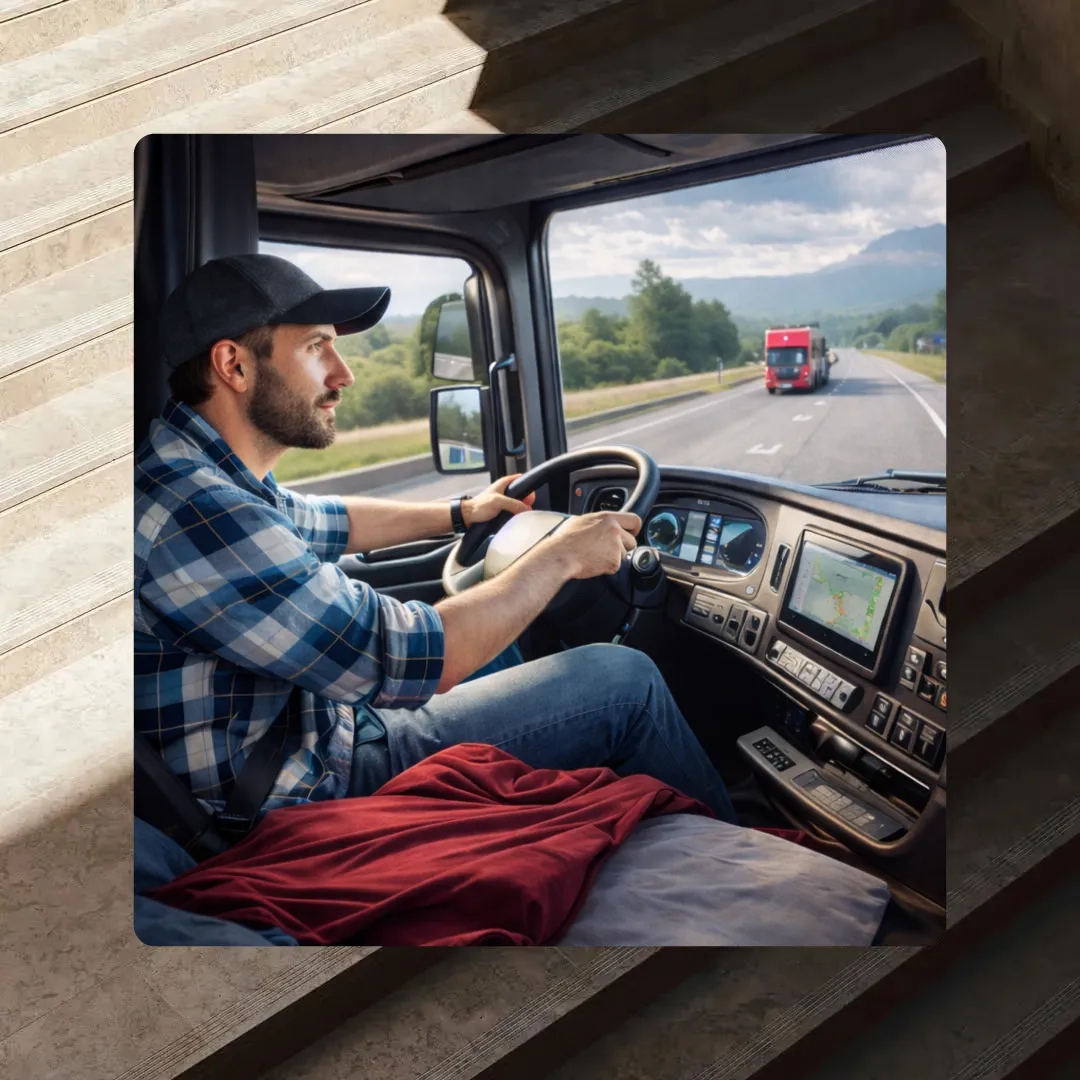
Honest Liechtenstein Guide for Foreign Truck Drivers
Liechtenstein is a wealthy Alpine microstate of under forty thousand residents between Switzerland and Austria — with more jobs than inhabitants. The catch: it is in the EEA but holds a special carve-out that caps residence permits with strict annual quotas, even for EU and EEA citizens. Over half its workforce commutes daily from Switzerland and Austria. Its haulage sector is tiny and operates within the Swiss customs and franc area. We tell you straight: Liechtenstein is not a direct destination for foreign drivers — the realistic paths run through Switzerland or Austria.
How the System Actually Works
Residence permits are allocated by quota, partly by lottery for EEA citizens, through the Migration and Passport Office — a handful per year against thousands of interested workers. Working without residing is the norm: cross-border commuters living in Switzerland or Austria take up Liechtenstein jobs with a simple confirmation, which is exactly how its economy staffs itself. For third-country nationals, direct residence is rarer still and effectively reserved for specialists.
What That Means for Drivers
The few transport firms in the country operate within the Swiss customs union, under Swiss-franc pay and largely Swiss-style road rules; their drivers overwhelmingly live in the Swiss Rhine valley or Austrian Vorarlberg and commute. The practical question isn’t “how do I move to Liechtenstein?” but “how do I get working status next door?” Austria has a documented route for non-EU drivers (see our Austria page). At the same time, Switzerland is largely closed to non-EU drivers (see our Switzerland page). EU drivers with free movement rights can take the commuter route directly.
Licences and Code 95
Liechtenstein applies EEA road-transport rules: EU/EEA licences are recognised, Code 95 (Driver CPC) applies to professional driving, and tachograph and medical requirements follow the familiar European pattern, administered with Swiss-aligned practice on the ground. A driver documented for Austria or Switzerland is, in practice, documented for work in Liechtenstein. More on Code 95 here.
Pay, Tax and Daily Life
Wages are Swiss-level and paid in Swiss francs, taxes are low, and living costs inside the country are very high — another reason the workforce commutes. Cross-border commuters pay tax under the applicable bilateral arrangements. Please get the specifics in writing from your employer.
Family and Long-Term Stay
For the rare quota-permit holders, family reunification and settled status follow EEA-style rules. For everyone else, family planning belongs with the Swiss or Austrian residence that anchors the commute.
How FastDriver.eu Helps
Create a free driver profile and browse live roles on the vacancies page — including Austrian employers within commuting reach of Liechtenstein. We’re transparent about when a market is quota-locked, and this one is. This is general information, not legal advice; final decisions rest with the Liechtenstein authorities.
Truck Driver Work in Liechtenstein: Quota Residence, Commuter Model & Realistic Alternatives
Honest FAQ for drivers asking about Liechtenstein. Learn how the quota-capped system works, why the workforce commutes from Switzerland and Austria, and which routes realistically apply to drivers.
Truck Driver Jobs in Liechtenstein – Frequently Asked Questions
Honest answer first: Liechtenstein caps residence with strict quotas even for EU citizens, over half its workforce commutes from Switzerland and Austria, and its haulage sector is tiny. The realistic path for a driver runs through Austrian (or, for EU drivers, Swiss) status plus cross-border commuting.- Can a foreign driver get a job in Liechtenstein?
- Isn’t Liechtenstein in the EEA with free movement?
- How does the commuter model work?
- What is the realistic route for a non-EU driver?
- What about EU drivers?
- How big is the haulage sector?
- What licence and Code 95 rules apply?
- What currency and pay apply?
- How are commuters taxed?
- Who issues permits?
- Is Liechtenstein in Schengen?
- Can my family join me?
- Should I plan around winning a residence quota?
- Do firms in Liechtenstein hire through agencies abroad?
- How do I apply through FastDriver.eu, and where do I verify requirements?
- Where can I verify the official requirements?
Official Government References
Always verify procedures with the competent authorities, as quotas and conditions are specific: the Migration and Passport Office of Liechtenstein for residence and cross-border matters (https://www.llv.li/en); the Liechtenstein national administration for transport rules; and for the realistic anchoring routes, the Austrian and Swiss authorities covered on our country pages. All final decisions rest with the relevant authorities.

Driver Jobs in Liechtenstein
Work with trusted Liechtenstein employers. Move your driving career up a gear.
Apply for Driver Jobs Now!
Last Updated: July 6, 2026
This content is reviewed and updated periodically to maintain accuracy and relevance.
Why FastDriver.eu ?
Our mission is to simplify truck driver recruitment across Europe.

Expanding Access
We continuously expand access to qualified, verified EU and non-EU truck drivers across Europe. By adapting to evolving transport demands and regulatory frameworks, we enable employers to secure talent efficiently and at scale.

Streamlining Recruitment
FastDriver.eu removes complexity from the hiring process by simplifying job posting, candidate shortlisting, and coordination. Our structured workflows reduce administrative effort, accelerate hiring timelines, and support informed decision-making.

People-Centered Approach
We place employers and drivers at the core of our platform. By combining industry expertise with a responsible, transparent approach, we deliver trust, reliability, and peace of mind throughout the recruitment journey.
FastDriver.eu is where truck drivers get hired:
Our job portal connects logistics companies with verified truck drivers across Europe and beyond.
5K+
Driver-job matches completed
43+
Countries and territories
200+
Hiring companies

5K+
Driver-job matches completed
43+
Countries and territories
200+
Hiring companies
Get Started with FastDriver
Our Platform
We connect truck drivers, transport companies, and recruiters across Europe through a dedicated driver job platform.

Employer
Register as a company to post truck driver jobs, manage vacancies, and connect directly with qualified professional drivers.

Drivers
Register as a driver to explore truck and commercial driving jobs across Europe and apply directly to verified employers.

Recruiters
Register as a recruiter to post driver jobs, reach active professional drivers, and support employers with fast and efficient hiring.

Trusted by Employers Across Europe

Successful hiring satisfaction

Of drivers and employers receive active support via FastDriver.eu

10+
Do you have any questions?
We support truck drivers, transport companies, and recruiters with job opportunities and driver recruitment across Europe, helping drivers find work and employers hire qualified professionals. Our job portal, FastDriver.eu, allows companies and recruiters to post driver jobs and connect directly with professional truck drivers through a simple, efficient platform.

