
Guide
Thank you for choosing the Category D1 Licence Guide in Europe
Get clear, reliable information about Category D1 driving licence requirements, minibus driver eligibility, passenger transport rules, and professional driving regulations across Europe.
Our guide helps drivers, shuttle operators, transport companies, tourism providers, and recruiters understand who can apply for a Category D1 licence, which documents are typically required, and how this licence permits driving minibuses, small passenger vehicles, shuttle vans, school transport, and community mobility services.
Whether you are applying for a new Category D1 licence, upgrading from a lower category, converting a foreign minibus licence, or planning to work as a professional minibus driver in Europe, this guide gives you the essential information to get started.
Complete EU Category D1 Driving Licence Guide: What It Is, Who Needs It & How to Get It
Quick Answer: What Is a Category D1 Driving Licence? A Category D1 driving licence is the EU minibus licence that authorises the holder to drive passenger vehicles designed to carry between 9 and 16 passengers in addition to the driver, on public roads across all 27 EU member states and EEA countries. Governed by EU Directive 2006/126/EC, Category D1 is the entry-level professional passenger vehicle licence — a step above the standard car licence and the practical route into minibus, community, and group transport.
What Is a Category D1 Driving Licence?
A Category D1 driving licence is the standardised EU professional authorisation that permits the holder to operate minibuses designed and constructed to carry between 9 and 16 passengers in addition to the driver on public roads throughout the European Economic Area. It is the entry-level professional passenger vehicle qualification, sitting between the standard Category B car licence and the full Category D bus and coach licence.
Governed by EU Directive 2006/126/EC and enforced across all 27 EU member states and three EEA countries — Iceland, Liechtenstein, and Norway — Category D1 covers minibuses used in community transport, care and school transport, group travel, airport and hotel shuttles, and a wide range of passenger services that do not require a full-size bus or coach. The category is subject to a maximum vehicle length defined in the directive. Without a valid Category D1 licence, a driver cannot legally operate a minibus carrying more than eight passengers on public roads within the EU — a standard Category B licence is limited to vehicles carrying up to eight passengers.
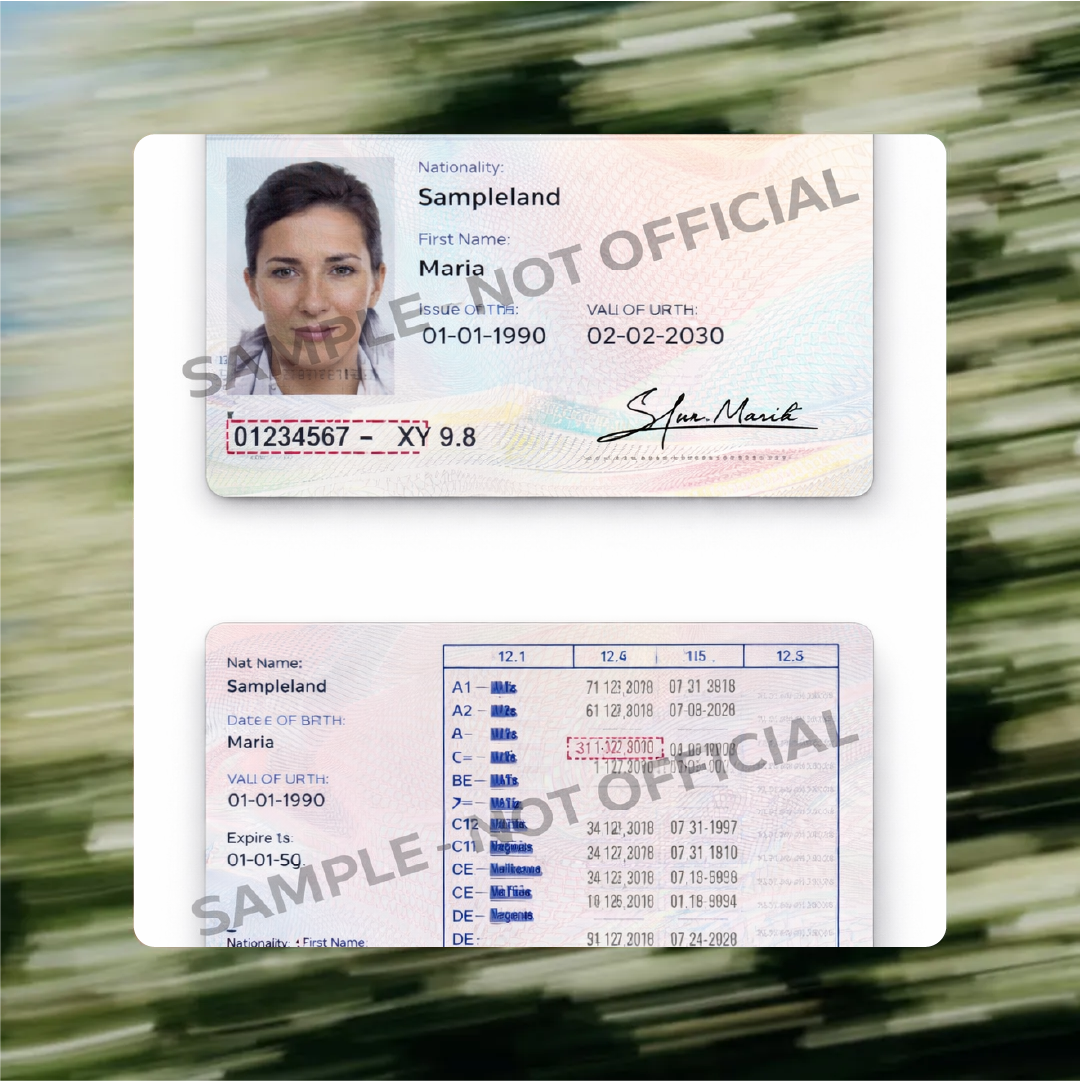
Category D1 is issued in the standardised EU credit card format with the category and its validity dates recorded in fields 9, 10, and 11 of the licence document. For commercial use, Category D1 must be accompanied by a valid Code 95 professional driver qualification recorded in field 12. However, certain non-commercial minibus uses may be exempt in some member states — both documents, where required, must be current and valid simultaneously for every commercial journey.
Why a Category D1 Driving Licence Is Required for Professional Drivers
The requirement for a Category D1 licence before operating any minibus carrying more than eight passengers reflects the road safety principle that drivers responsible for the lives of multiple passengers must demonstrate competence beyond that required for standard car driving. A minibus has different braking distances, turning characteristics, blind spots, and passenger safety requirements from a passenger car, and the driver is responsible for every passenger on board.
The Category D1 qualification process — encompassing theory training, written examination, practical vehicle training, and a practical driving test — ensures that every D1 holder has been assessed against a defined minimum competence standard before being permitted to carry passengers in a minibus on public roads. This protects the driver, the passengers, and every other road user.
For passenger transport operators and employers, allowing a driver to operate a D1 minibus commercially without a valid licence is a serious offence that can result in operator licence action, invalidation of vehicle insurance, and criminal liability. Licence verification is a fundamental and ongoing legal compliance obligation.
EU Driving Licence Directive and Legal Framework for Category D1
Category D1 is defined and governed within the EU driving licence framework established by EU Directive 2006/126/EC, which took full effect across all EEA member states on 19 January 2013. This directive harmonised the definition and qualification standards for all professional driving licence categories — including Category D1 — across all member states, established minimum age requirements, set minimum training and testing standards, defined validity periods, and introduced the medical examination requirements that apply at each renewal.
Key legislative instruments governing Category D1:
- EU Directive 2006/126/EC — primary driving licence directive defining Category D1, minimum ages, validity, medical standards, and mutual recognition
- EU Directive 2003/59/EC — governing the Code 95 professional driver qualification, required for commercial Category D1 driving (subject to exemptions for certain non-commercial uses)
- EU Directive 2018/645 — amending the Code 95 framework to include online training provisions and additional content
- Regulation (EC) No. 561/2006 — EU driving hours rules applicable to passenger vehicles carrying more than eight passengers
- Regulation (EU) No. 165/2014 — tachograph requirements for passenger vehicles carrying more than eight passengers
- National implementing legislation — each member state transposes EU directives into domestic law with its own administrative procedures, penalty structures, and enforcement powers.
Which Drivers Must Hold a Category D1 Driving Licence
Any person who drives a minibus designed to carry between 9 and 16 passengers in addition to the driver on public roads within any EU or EEA member state is legally required to hold a valid Category D1 driving licence — or full Category D, which also covers this passenger band — issued by a competent EU or EEA authority. This requirement applies to EU nationals, EEA nationals, third-country nationals legally resident in an EU member state, and visiting drivers from non-EU countries, subject to applicable recognition arrangements.
Drivers who must hold Category D1:
- Minibus drivers operating community and group transport
- Care and school transport drivers operating minibuses for 9 to 16 passengers
- Airport, hotel, and shuttle minibus drivers
- Employees of passenger transport operators driving any minibuswith over eight passengers
- Drivers operating minibuses for clubs, charities, and organisations carrying 9 to 16 passengers
- Any person driving a minibus designed for 9 to 16 passengers on a public road, including for non-commercial purposes
Drivers who do not require Category D1:
- Drivers of vehicles designed for up to eight passengers — covered by Category B
- Holders of full Category D, which automatically covers the D1 passenger band and beyond
Vehicles Covered Under Category D1
Category D1 covers minibuses designed to carry between 9 and 16 passengers, including the driver, within the maximum vehicle length defined in the directive.
| Vehicle Type | Covered by Category D1? |
|---|---|
| Minibus 9–16 passengers | Yes — fully covered |
| Community transport minibus | Yes |
| School or care minibus 9–16 passengers | Yes |
| Airport or hotel shuttle minibus | Yes |
| Minibus towing trailer up to 750 kg | Yes — included in Category D1 entitlement |
| Minibus towing a trailer over 750 kg | No — Category D1E required |
| Bus or coach over 16 passengers | No — Category D required |
| Vehicle for up to 8 passengers | Category B is sufficient |
Professional vs Private Use of Category D1 Vehicles
A driver holding a Category D1 licence may operate minibuses for both private non-commercial purposes and commercial transport operations. However, the additional compliance obligations that apply depend entirely on whether the minibus is being used commercially.
For certain non-commercial minibus use — for example, a volunteer driving a community or charity minibus where a national exemption applies — Code 95 may not be required, and tachograph rules may not apply, depending on the nature of the operation. The exemptions for non-commercial and voluntary minibus driving vary significantly between member states, so drivers should verify the specific exemptions applicable to their situation with the national authority.
For all commercial passenger transport operations — meaning carriage of passengers for hire, reward, or as part of a business activity — Category D1 must be accompanied by a current Code 95, a valid driver card, and full tachograph compliance at all times. These are legally independent but simultaneously required obligations for every commercial journey.
Category D1 Driving Licence: What It Covers and What It Does Not
Category D1 is defined under EU Directive 2006/126/EC as covering motor vehicles designed and constructed for the carriage of no more than 16 passengers, in addition to the driver, and with a maximum length specified in the directive. The category covers minibuses within this passenger and length specification, including vehicles to which a light trailer may be attached.
Towing Rules for Category D1 Holders: A Category D1 licence holder may tow a light trailer with a maximum authorised mass not exceeding 750 kg as part of the standard Category D1 entitlement. For combinations where the trailer’s maximum authorised mass exceeds 750 kg, Category D1E is required. Category D1 alone does not provide legal authorisation for heavier trailer combinations.
For passenger vehicles designed to carry more than 16 passengers or exceeding the maximum length for D1, full Category D is required. Category D1 is limited to the minibus class and does not authorise full-size buses and coaches.
Difference Between Category D1 and Category D
Category D1 covers minibuses designed for 9 to 16 passengers, within a maximum length. Category D covers all passenger vehicles designed to carry more than 8 passengers with no upper passenger limit, including full-size buses and coaches. A driver holding full Category D is automatically authorised to drive vehicles within the D1 passenger band — Category D is the higher and more comprehensive qualification. Category D1 holders cannot legally drive vehicles designed to carry more than 16 passengers.
| Feature | Category D1 | Category D |
|---|---|---|
| Minimum passengers | 9 passengers | More than 8 passengers |
| Maximum passengers | Up to 16 passengers | No upper limit |
| Minimum age | 21 years | 24 years (21 with Code 95) |
| Code 95 required (commercial) | Yes | Yes |
| Covers vehicles with over 16 passengers | No | Yes |
| Prerequisite | Category B | Category B |
Difference Between Category D1 and Category D1E
Category D1 covers minibuses operating as single units or with a light trailer up to 750 kg. Category D1E covers a Category D1 minibus towing a trailer whose maximum authorised mass exceeds 750 kg, within the limits defined for D1E combinations. D1E requires Category D1 as a prerequisite and is used by drivers who tow heavier trailers behind a minibus.
| Feature | Category D1 | Category D1E |
|---|---|---|
| Vehicle type | Minibus 9–16 passengers | Minibus with heavy trailer |
| Trailer permitted | Up to 750 kg only | Over 750 kg, within D1E limits |
| Prerequisite | Category B | Category D1 |
| Minimum age | 21 years | 21 years |
| Code 95 required (commercial) | Yes | Yes |
Minimum Age Requirements for Category D1
The standard minimum age for a Category D1 driving licence under EU Directive 2006/126/EC is 21 years. This is lower than the standard minimum age for full Category D (24 years), reflecting the smaller passenger band that D1 covers. Member states retain the right to set higher minimum ages within their national implementing legislation.
Applicants should verify the specific minimum age requirements applicable in their country of residence with the national licensing authority before enrolling in Category D1 training.
Medical and Vision Requirements for Category D1
Category D1 is a professional vehicle category subject to significantly more stringent medical and vision requirements than Category B, reflecting the responsibility of carrying passengers. These requirements apply at initial licence issue and at every subsequent five-year renewal throughout the driver’s career.
Vision requirements for Category D1:
- Visual acuity of at least 0.8 in the better eye and 0.1 in the other eye, with or without corrective lenses
- Binocular visual field of at least 160 degrees horizontally
- No double vision (diplopia) affecting safe driving
- Normal colour vision or sufficient colour discrimination for traffic signal and warning light recognition
- No progressive eye disease is likely to fail to meet standards within the validity period
General medical requirements for Category D1:
- No active cardiovascular disease constituting a risk to road safety — specific assessments required for conditions including hypertension, coronary artery disease, and arrhythmia
- No epilepsy or seizure disorder unless a defined seizure-free period with specialist assessment has been completed
- No insulin-dependent diabetes unless specifically assessed and approved with appropriate specialist confirmation
- No severe obstructive sleep apnoea unless diagnosed, treated, and confirmed as adequately controlled by a recognised specialist
- No musculoskeletal condition significantly affecting the ability to maintain safe vehicle control throughout extended driving periods.
- No use of medications that impair alertness, reaction time, or cognitive function to a degree affecting safe driving
Medical examinations for Category D1 must be conducted by a qualified medical practitioner recognised by the national authority for this purpose.
Physical Fitness Standards for Category D1 Professional Drivers
Professional Category D1 drivers are expected to maintain the physical fitness and health standards required to operate minibuses safely, often carrying passengers including children, older people, and vulnerable groups in community, care, and school transport. The EU medical framework recognises that minibus driving places specific physical and cognitive demands on the driver that are greater than those associated with driving a private car, with the added responsibility of passenger safety. The frequency of medical checks increases progressively with age. In many member states, additional checks are required from age 45, and from age 65, annual medical reviews are required as a condition of continued Category D1 entitlement. Drivers approaching these thresholds should plan to ensure medical assessments are completed before their licence expiry date.
Criminal and Traffic Record Requirements for Category D1
The standard background and traffic record checks applicable to all EU driving licence applications apply to Category D1, with additional weight given to the professional nature of the qualification and the passenger-safety implications of minibus operation. The national licensing authority assesses previous driving disqualifications, serious traffic convictions, and relevant criminal history as part of the application process. Because D1 drivers carry passengers — and minibuses are widely used in school, care, and community transport — some member states apply additional background screening requirements.
Drivers who have previously held Category D1 and been disqualified should seek specific advice from the national authority regarding the re-application process and any additional requirements applicable to their circumstances.
How to Obtain a Category D1 Driving Licence: Step-by-Step Process
Step 1: Meet Eligibility Requirements. Before enrolling in Category D1 training, confirm that you meet the minimum age requirement of 21 years and hold a valid Category B driving licence, as this is a mandatory prerequisite in most EU member states. Verify that you have no medical condition that disqualifies you from holding a professional category licence. Check any additional national requirements applicable in your country of residence with the national licensing authority before committing to any training programme — you can review the full licence eligibility requirements first.
Step 2: Register with an Approved Driving School. Category D1 training must be conducted through a driving school or training provider that is officially approved and registered by the national licensing authority for professional vehicle categories. Verify that any school you register with holds current approval specifically for Category D1 training — general driving school approval does not automatically cover professional category training in all member states.
Step 3: Complete Mandatory Theoretical Training. Theoretical training for Category D1 covers vehicle mechanics, braking systems and safe stopping distances for minibuses, passenger safety and management, EU driving hours rules and tachograph operation, road safety and hazard awareness specific to minibuses, environmental best practice, EU transport law applicable to passenger vehicles, and the specific regulatory requirements of the Category D1 framework.
Step 4: Pass the Theory Examination. Following theoretical training, applicants must pass a theory examination covering all subjects applicable to Category D1. The national licensing authority or an authorised examination body administers the examination. The pass mark, question format, and structure vary between member states, but all must cover the minimum syllabus prescribed under the EU framework.
Step 5: Complete Practical Driving Training. Practical Category D1 driving training must be completed with an approved instructor in a vehicle that meets the minimum specification requirements for Category D1 testing — specifically a minibus designed for 9 to 16 passengers meeting the dimensional and technical requirements set by the national authority. Training covers vehicle safety checks, passenger safety and boarding awareness, manoeuvring in confined spaces, reversing, open-road driving, and the handling characteristics of minibuses.
Step 6: Pass the Practical Driving Test. The Category D1 practical test is administered by a certified examiner from the national licensing authority or an authorised examination body. The test vehicle must meet the prescribed minimum specifications for Category D1 examination. The test assesses vehicle safety knowledge (the pre-drive safety check, or“walkaround” check), controlled manoeuvring, passenger safety awareness, and general road driving under real traffic conditions.
Step 7: Receive the Official EU Category D1 Driving Licence. Following the successful completion of all theory and practical examinations, the national licensing authority records the Category D1 entitlement on the driving licence. The category, first issue date, and expiry date are recorded in fields 9, 10, and 11 of the EU licence. Processing times vary by member state but typically range from 1 to 4 weeks. Upon receipt, verify all details before commencing commercial driving.
Professional Driver Qualification Requirements for Category D1
In addition to the Category D1 driving licence, professional drivers operating D1 minibuses commercially in the EU must hold a valid Code 95 Certificate of Professional Competence under EU Directive 2003/59/EC. This professional qualification must remain current and valid alongside the Category D1 licence at all times while driving commercially.
Code 95 is obtained through Initial Qualification — either a standard programme or an accelerated programme for existing licence holders — and maintained through 35 hours of approved Periodic Training every five years. An expired Code 95 immediately disqualifies the driver from commercial operation regardless of the continued validity of the Category D1 licence itself. Certain non-commercial and voluntary minibus uses may be exempt from Code 95 in some member states, and drivers should confirm the applicable position for their operation with the national authority.
Code 95 Requirement for Category D1 Commercial Drivers
Code 95 is the EU professional driver qualification, appearing as a code in field 12 of the driving licence alongside the relevant vehicle category (D1 95) or on a separate Driver Qualification Card. It is required for the commercial use of Category D1, D, D1E, and DE vehicles across all EU member states and EEA countries.
- Code 95 must be valid before commencing any commercial driving in a Category D1 minibus.
- Driving commercially without a valid Code 95 is an active violation enforced during roadside inspections.
- Employers must independently verify the validity of Code 95 — a self-declaration by the driver is legally insufficient.
- Code 95 expires during employment and must be renewed before the driver returns to commercial driving.
- Exemptions for certain non-commercial and voluntary minibus driving vary by member state and should be confirmed with the national authority.
Converting a Foreign Driving Licence to an EU Category D1 Licence
Drivers holding a minibus or passenger vehicle licence issued by a non-EU country who are legally resident in an EU member state may be eligible to exchange their foreign licence for an EU Category D1 licence, subject to applicable bilateral recognition agreements. Where no exchange agreement covers Category D1 — which is common, as most bilateral agreements focus on Category B — the driver must complete the full EU theory and practical examination process regardless of their previous driving experience.
Non-EU drivers should not assume that a passenger vehicle licence from their home country automatically provides entitlement in the EU. The legal authorisation to drive commercially in the EU requires a valid EU licence in the correct category — foreign licences confer no commercial driving entitlement in EU member states unless a specific, current recognition arrangement applies.
Required Documents for Category D1 Licence Conversion
Standard documents required for a Category D1 foreign licence exchange or conversion application include the original valid foreign driving licence, an official translation where required, a valid passport or national identity document, proof of legal residence, ca completed application form, the applicable fee, ca current medical certificate confirming fitness for Category D1, and passport-standard photographs. Where no exchange agreement exists, proof of completion of theory and practical examinations is additionally required.
How Long Is a Category D1 Driving Licence Valid
Under EU Directive 2006/126/EC, Category D1 driving licences are issued with an administrative validity period of five years. This shorter validity period — compared with the 10 to 15 years applicable to Category B — reflects the additional medical requirements associated with professional passenger vehicle driving and ensures that drivers are periodically assessed for continued fitness to hold a professional licence.
The five-year validity applies consistently across all EU member states for Category D1. However, individual member states may apply shorter validity periods for older drivers, with progressive reductions from age 65 in many countries.
| Member State | Category D1 Validity | Age-Related Reduction |
|---|---|---|
| Germany | 5 years | Additional checks from age 50 in some contexts |
| France | 1–5 years, depending on age and medical | Shorter periods from age 60 |
| Greece | 5 years up to age 65 | 3 years age 65–80; 2 years above 80 |
| Netherlands | 5 years | Shorter validity above age 65 |
| Hungary | 5 years | Progressive reduction from age 50 |
| Sweden | 5 years | — |
When Category D1 Drivers Must Renew Their Licence
Category D1 drivers must initiate the renewal process before the expiry date recorded in field 11 of their driving licence. Driving commercially with an expired Category D1 licence is an active violation — there is no grace period. Renewal requires submission of a current medical certificate to the national licensing authority, along with the standard administrative renewal documentation and applicable fee. Drivers are strongly advised to initiate the renewal process at least 3 months before the expiry date to allow time for processing and scheduling medical appointments.
Periodic Medical Checks for Category D1 Drivers
Medical examination is a mandatory component of every Category D1 licence renewal. The examination must be conducted by a qualified medical practitioner recognised by the national authority. It must confirm that the driver continues to meet all applicable vision, cardiovascular, neurological, and general fitness standards for Category D1.
From age 45, additional periodic medical checks are required in many member states as a condition of continued Category D1 entitlement, independently of the five-year licence renewal cycle. From age 65, annual medical reviews are required in most EU member states to maintain professional category entitlement. Drivers with known medical conditions may be issued licences of shorter validity, subject to more frequent medical review.
Licence Renewal Procedures for Category D1 in EU Countries
The standard Category D1 renewal process involves completing a renewal application with the national licensing authority, submitting a current medical certificate obtained from a recognised practitioner, paying the applicable renewal fee, and providing a current passport photograph. In most member states, renewal can be initiated online, in person at a licensing office, or through an approved intermediary. The physical licence is typically reissued within 1 to 4 weeks of a successful application, with the new 5-year validity period recorded in field 11.
EU Driving Hours Regulations for Category D1 Drivers
Professional drivers operating Category D1 minibuses that carry more than eight passengers commercially are subject to the EU driving hours rules set out in Regulation (EC) No. 561/2006. These rules set absolute limits on driving time and mandatory minimum rest periods designed to prevent driver fatigue and protect passenger and road safety.
Key Category D1 driving hours limits:
| Rule | Requirement |
|---|---|
| Maximum daily driving | 9 hours (extendable to 10 hours twice per week) |
| Maximum weekly driving | 56 hours |
| Maximum fortnightly driving | 90 hours over any two consecutive weeks |
| Break after 4.5 hours of driving | 45 minutes uninterrupted (or 15 + 30 minutes split) |
| Minimum daily rest | 11 consecutive hours (reducible to 9 hours up to 3 times) |
| Minimum regular weekly rest | 45 consecutive hours |
Certain exemptions apply to specific passenger transport operations, including some regular services over short distances. Drivers should confirm with the national authority which rules apply to their operation.
Tachograph Rules for Category D1 Drivers
Category D1 drivers operating minibuses carrying more than eight passengers commercially must use an approved tachograph in accordance with Regulation (EU) No. 165/2014. The tachograph automatically records driving time, vehicle speed, distance, and driver activity and must be operated correctly at all times. A valid driver card must be inserted before driving commences, and all activity modes — driving, other work, availability, and rest — must be accurately recorded throughout the working day. Certain operations may be exempt from the tachograph requirement; drivers should confirm with the national authority.
Smart tachograph Version 2 is mandatory for new vehicles registered from August 2023 and for vehicles engaged in international transport by August 2025.
Rest Period Requirements for Category D1 Drivers
Category D1 drivers within the scope of the EU rest period framework under Regulation (EC) No. 561/2006 must take a minimum daily rest of eleven consecutive hours between any two working days, with provision for reduction to nine hours on up to three occasions between weekly rests. A regular weekly rest of 45 consecutive hours must be taken. Following EU Mobility Package reforms, regular weekly rest must not be taken in the vehicle — drivers must have access to suitable accommodation provided or funded by the employer.
Penalties for Violating Driving Regulations as a Category D1 Driver
Violations of EU driving hours rules, tachograph requirements, and Category D1 licence conditions are actively enforced across all EU member states through roadside inspections, company compliance audits, and cross-border enforcement cooperation. Penalties range from fixed-penalty fines for minor procedural violations to vehicle prohibition and licence suspension for serious infringements, and to criminal prosecution for tachograph fraud. For passenger transport operators, persistent violation patterns can result in the curtailment or revocation of their operator licence.
Working as a Category D1 Driver in Europe
Category D1-qualified drivers have access to a wide professional employment market across all EU member states. Minibuses are widely used for community, care, school, and group transport, and the structural shortage of qualified professional drivers sustains demand. Principal employment opportunities for D1 drivers include community and care transport, school transport services, group and club travel, airport and hotel shuttle services, and roles that combine minibus driving with care or support duties.
Category D1 as a Step Toward Category D
For many drivers, Category D1 is the entry point into professional passenger driving and a stepping stone toward full Category D. Obtaining D1 first allows a driver to gain professional experience carrying passengers in minibuses before progressing to full-size buses and coaches. The pathway runs from Category B to D1 to D, and onward to DE for the largest passenger combinations.
Salary Expectations for Category D1 Drivers in Europe
Professional Category D1 driver salaries vary across EU member states based on country of employment, sector, experience, and the nature of the operations. Drivers holding D1 with a current Code 95 consistently command higher salaries than those without a professional qualification. Roles that combine D1 driving with additional skills — such as care, support, or passenger assistance — often attract higher compensation. Drivers who progress from D1 to full Category D gain open access to higher salary bands in the wider passenger transport sector.
Transport Companies Hiring Category D1 Drivers
Category D1 drivers are recruited by community transport providers, care and school transport operators, group travel companies, hotel and airport shuttle operators, and a wide range of organisations that operate minibuses. When evaluating potential employers, D1 drivers should verify that the company holds a valid operator licence where required, that tachograph and driving hours compliance systems are in place, and that the employment contract correctly reflects EU working time and driving hours obligations.
Common Mistakes Category D1 Drivers Make
Driving Commercially Without a Valid Code 95. The most consequential compliance error is operating commercially after Code 95 has expired — or commencing commercial driving before Code 95 has been obtained, where it is required. Category D1 alone does not provide lawful authorisation for commercial driving in most cases. Both the licence and Code 95, where required, must be current simultaneously.
Misunderstanding the Non-Commercial Exemptions. The exemptions for voluntary and non-commercial minibus driving vary by member state, and drivers sometimes assume an exemption applies when it does not. Always confirm the position with the national authority before driving without a Code 95.
Exceeding the 16-Passenger Limit. A D1 holder driving a vehicle designed to carry more than 16 passengers is in violation — a full Category D is required for larger vehicles. Operating a vehicle outside the D1 passenger band is a serious offence regardless of experience.
Ignoring the Five-Year Renewal Requirement. Unlike Category B, Category D1 expires every five years and requires a medical certificate at renewal. Setting a calendar reminder 90 days before the D1 expiry date is essential, particularly where the D1 and B categories have different expiry dates on the same licence.
Exceeding Tachograph and Driving Hours Limits. D1 drivers within the scope of the EU driving hours framework who exceed daily, weekly, or fortnightly limits — or who fail to take required breaks and rest periods — are in direct violation of EU road transport law. These violations are systematically detected at roadside inspections and company audits.
Benefits of Holding a Valid Category D1 Driving Licence
A valid Category D1 licence, combined with a current Code 95 for commercial use, provides legal authorisation to operate minibuses carrying up to 16 passengers commercially in all 27 EU member states and EEA countries without re-examination or conversion. It opens access to a wide employment market in community, care, school, and group transport, offers a route into professional passenger driving at age 21, and serves as the entry point on the pathway toward full Category D. The step from Category B to D1 represents a meaningful increase in professional qualification.
EU Countries Recognising Category D1 Driving Licences
All 27 EU member states and the three EEA countries are legally required under EU Directive 2006/126/EC to recognise a valid Category D1 licence issued by any other EEA member state. A valid EU Category D1 licence combined with current Code 95, where required, is recognised for driving in all of the following countries: Austria, Belgium, Bulgaria, Croatia, Cyprus, Czech Republic, Denmark, Estonia, Finland, France, Germany, Greece, Hungary, Ireland, Italy, Latvia, Lithuania, Luxembourg, Malta, Netherlands, Poland, Portugal, Romania, Slovakia, Slovenia, Spain, Sweden — and additionally in Iceland, Liechtenstein, and Norway under the EEA Agreement.
Driving Across EU Borders with Category D1
Category D1 drivers engaged in domestic or international passenger operations can cross EU member state borders and drive commercially in any EU country using their existing EU Category D1 licence and current Code 95, where required, without any additional national authorisation, endorsement, or registration. The licence and Code 95 together constitute the complete legal authorisation for commercial minibus driving throughout the EEA.
Final Thoughts: Starting Your Passenger Driving Career with Category D1
Category D1 is the entry point into professional passenger driving in Europe. Available from age 21, it allows a driver to operate minibuses carrying up to 16 passengers and to begin building professional experience carrying passengers before progressing to full-size buses and coaches.
For drivers with ambitions in the wider passenger transport sector, D1 is the first step on a clear pathway: from D1 to full Category D, and onward to DE for the largest passenger combinations. The investment in D1 training, examination, Code 95 qualification, and ongoing medical fitness is an investment in a career that offers genuine employment security and the chance to make a real difference in community, care, and group transport across an entire continent.
Official Government References
- European Commission – Mobility and Transport: Official guidance on EU driving licences and road transport regulations — https://transport.ec.europa.eu
- EU Directive 2006/126/EC (EUR-Lex): Full official text of the EU driving licence directive — https://eur-lex.europa.eu
- EU Directive 2003/59/EC (EUR-Lex): Full official text of the Code 95 professional driver qualification directive — https://eur-lex.europa.eu
- European Labour Authority (ELA): Cross-border enforcement and worker mobility guidance — https://ela.europa.eu
Category D1E Driving Licence FAQs
Common questions about the EU Category D1E minibus and trailer licence — covering eligibility, the Category D1 prerequisite, minimum age, Code 95, validity and renewal, and how to qualify across all 27 EU member states and EEA countries.- What is a Category D1E driving licence?
- What can I drive with a Category D1E licence?
- Do I need a Category D1 licence before D1E?
- What is the minimum age for a Category D1E licence?
- What's the difference between Category D1 and D1E?
- What's the difference between Category D1E and DE?
- When does Category D1 towing become D1E towing?
- Can I tow a trailer over 750 kg with just Category D1?
- Who needs a Category D1E licence?
- Do I need Code 95 as well as a Category D1E licence?
- Does my Code 95 from Category D1 carry over to D1E?
- Where is Code 95 shown on the licence?
- What happens if my Code 95 expires?
- How do I obtain a Category D1E licence?
- What does Category D1E training cover?
- What does the Category D1E practical test involve?
- Is there a theory test for Category D1E?
- What are the medical requirements for Category D1E?
- How long is a Category D1E licence valid?
- Do I need a medical to renew Category D1E?
- Do older drivers face shorter Category D1E validity?
- When should I renew my Category D1E licence?
- Is my Category D1E licence valid in other EU countries?
- Can I drive commercially across EU borders with Category D1E?
- Can a non-EU driver get a Category D1E licence in Europe?
- What documents do I need to convert a foreign licence to D1E?
- What driving hours rules apply to Category D1E drivers?
- What rest periods must Category D1E drivers take?
- Do Category D1E drivers need to use a tachograph?
- What are the penalties for breaking Category D1E driving rules?
- What happens if I exceed the D1E combination limits?
- Does the combination limit refer to actual weight or maximum authorised mass?
- What jobs can I do with a Category D1E licence?
- How does D1E fit into the passenger vehicle licence pathway?
Important Disclaimer
The information provided in this guide is intended solely for general educational and informational purposes. It does not constitute legal advice and must not be relied upon as a substitute for specific professional legal, regulatory, or compliance advice tailored to your individual circumstances. EU driving licence and professional driver qualification regulations are complex, subject to regular legislative updates, and vary in national implementation. Readers are advised to verify all current requirements with the relevant national licensing authority or a qualified transport compliance professional before making any operational or legal decisions.
Author: FastDriver.eu
FastDriver.eu provides practical, accurate guidance for professional drivers and transport operators across Europe, covering EU driving licence categories, Code 95 qualification, tachograph compliance, driving hours rules, and industry insights to help drivers and operators maintain full legal compliance across all EU member states.
Last Updated: June 29, 2026
This content is reviewed and updated periodically to maintain accuracy and relevance.
