
Guide
Thank you for choosing the Category B1 Licence Guide in Europe
Get clear, reliable information about Category B1 driving licence requirements, light vehicle eligibility, quadricycle rules, and road regulations across Europe.
Our guide helps drivers, employers, delivery operators, and recruiters understand where Category B1 is recognised, who may apply for it, which documents are usually required, and how this licence can support light-vehicle driving for local mobility, small deliveries, and urban transport purposes.
Whether you are applying for a new Category B1 licence, converting a foreign licence, or checking your eligibility to drive light quadricycles in Europe, this guide gives you the essential information to get started.
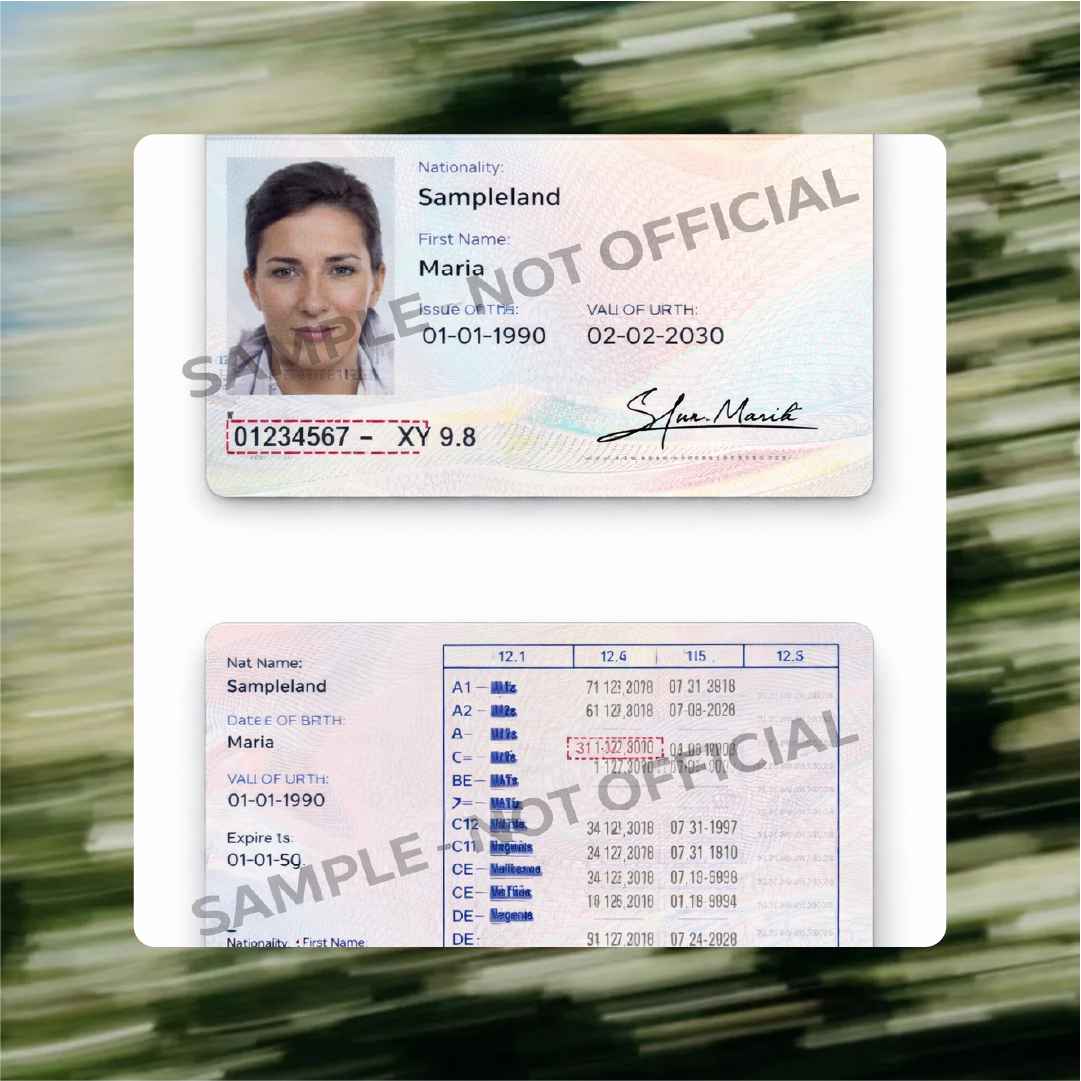
Complete EU Category B1 Driving Licence Guide: What It Is, Who Needs It & How to Get It
Quick Answer: What Is a Category B1 Driving Licence? A Category B1 driving licence is the optional EU licence that authorises the holder to drive heavy quadricycles — powered four-wheeled vehicles that are larger than a moped but lighter than a car — on public roads. Governed by EU Directive 2006/126/EC, Category B1 is an optional category that individual member states may choose to issue. Where it is not issued, the vehicles it covers fall under Category B or Category AM instead.
What Is a Category B1 Driving Licence?
A Category B1 driving licence is the standardised EU authorisation that permits the holder to operate heavy quadricycles on public roads. A heavy quadricycle is a powered four-wheeled vehicle that sits between a moped or light quadricycle and a full passenger car in terms of weight, power, and capability. These vehicles include certain microcars and powered four-wheelers used for short-distance personal mobility, particularly in urban and rural settings.
Governed by EU Directive 2006/126/EC, Category B1 is an optional licence category — the directive permits each member state to decide whether to issue it. As a result, Category B1 exists as a distinct licence entitlement in some EU member states but not in others. In countries that do not issue Category B1, the heavy quadricycles it would cover are instead driven under the authority of a full Category B car licence or, for lighter vehicles, a Category AM licence. Drivers should always confirm the position in their own country of residence with the national licensing authority.
Where it is issued, Category B1 is recorded in the standardised EU credit card format with the category and its validity dates shown in fields 9, 10, and 11 of the licence document. Category B1 is not a professional driver category — it does not require a Code 95 professional driver qualification, and tachograph rules do not apply to it.
Why a Category B1 Driving Licence Exists
The Category B1 licence reflects the EU’s graduated approach to driving entitlements, recognising that heavy quadricycles occupy a distinct space between mopeds and cars. These vehicles are more capable and faster than light quadricycles, but do not demand the full range of competence required to operate a passenger car in all conditions. Category B1 provides a defined entitlement matched to this intermediate vehicle class.
For some drivers — particularly younger drivers in member states that set a lower minimum age for B1 than for full car driving, or drivers who need short-distance mobility without a full car licence — Category B1 offers a route to legally operating heavy quadricycles. Because the category is optional, however, its practical relevance depends entirely on whether the driver’s country of residence chooses to issue it.
EU Driving Licence Directive and Legal Framework for Category B1
Category B1 is defined and governed within the EU driving licence framework established by EU Directive 2006/126/EC, which took full effect across all EEA member states on 19 January 2013. The directive defines Category B1 as covering quadricycles and sets out the framework within which member states may issue it. Crucially, the directive makes Category B1 optional rather than mandatory — each member state decides whether to implement it within its national legislation.
Key points of the legal framework relevant to Category B1 include that it is an optional category not issued by all member states, that the minimum age is set within the directive’s framework (commonly 16 years where the category is issued, though member states may vary this), and that licences are issued only in the member state where the applicant is normally resident. Because Category B1 is not a professional category, EU Directive 2003/59/EC on the Code 95 professional driver qualification does not apply to it, and the tachograph requirements under Regulation (EU) No. 165/2014 do not apply to it.
Which Drivers Need a Category B1 Driving Licence
In member states that issue Category B1, any person who drives a heavy quadricycle on public roads must hold the appropriate entitlement — either Category B1 specifically or a higher category that includes it, such as Category B. This requirement applies to EU nationals, EEA nationals, third-country nationals legally resident in an issuing member state, and visiting drivers, subject to applicable recognition arrangements.
Drivers who may need Category B1 (where issued):
- Drivers of heavy quadricycles for personal short-distance mobility
- Younger drivers seeking heavy quadricycle entitlement before they are eligible for a full car licence, where national rules allow
- Drivers of certain microcars are classified as heavy quadricycles
- Drivers in rural or urban settings using powered four-wheelers within the B1 vehicle class
Drivers who do not need a separate Category B1 entitlement:
- Holders of a full Category B car licence, which includes heavy quadricycle entitlement in most member states
- Drivers in member states that do not issue Category B1, where the relevant vehicles fall under Category B or AM
Vehicles Covered Under Category B1
Category B1 covers heavy quadricycles — powered four-wheeled vehicles within defined weight and power limits that exceed those of light quadricycles but fall short of full passenger cars.
| Vehicle Type | Covered by Category B1? |
|---|---|
| Heavy quadricycle | Yes — where the category is issued |
| Microcar is classified as a heavy quadricycle | Yes — where the category is issued |
| Powered four-wheeler within B1 limits | Yes — where the category is issued |
| Light quadricycle / moped | No — Category AM applies |
| Standard passenger car | No — Category B required |
| Goods vehicle over 3,500 kg | No — Category C or C1 required |
| Bus or minibus over 8 passengers | No — Category D or D1 required |
Professional vs Private Use of Category B1 in Europe
Category B1 is overwhelmingly a private-use category. Heavy quadricycles are used primarily for personal short-distance mobility rather than commercial transport. As a non-professional category, Category B1 does not require Code 95, and tachograph rules do not apply. There are no professional driver qualification obligations attached to it.
Drivers using a heavy quadricycle in any limited commercial capacity should verify the specific requirements applicable to their vehicle and use with their national authority, as national rules on the commercial use of quadricycles can vary.
Category B1 Driving Licence: What It Covers and What It Does Not
Category B1 is defined under EU Directive 2006/126/EC as covering quadricycles within the defined heavy quadricycle class. The entitlement is specific to these vehicles and does not extend to passenger cars, goods vehicles, or passenger vehicles carrying more than eight passengers. Where a driver needs to operate a full car, Category B is required; where the vehicle is a light quadricycle or moped, Category AM applies.
Because Category B1 is optional, its availability and exact scope may differ across member states. The single most important point for any driver is to confirm with the national licensing authority whether Category B1 is issued in their country and, if not, which category applies to the vehicle they intend to drive.
Difference Between Category B1 and Category AM
Category AM covers light quadricycles and mopeds — the smallest powered vehicles in the EU framework. Category B1 covers heavy quadricycles, which are larger, faster, and more capable than AM vehicles. AM is the entry-level powered vehicle entitlement, while B1 sits a step above it for the heavy quadricycle class.
| Feature | Category AM | Category B1 |
|---|---|---|
| Vehicle class | Mopeds and light quadricycles | Heavy quadricycles |
| Typical minimum age | 16 years | 16 years (where issued) |
| Issued in all member states | Yes | No — optional category |
| Professional category | No | No |
| Code 95 required | No | No |
Difference Between Category B1 and Category B
Category B1 covers heavy quadricycles, while Category B covers full passenger cars and light vehicles up to 3,500 kg. A Category B licence includes heavy quadricycle entitlement in most member states, meaning a full car licence holder can generally drive B1 vehicles without a separate B1 entitlement. B1 holders, by contrast, cannot drive full passenger cars — they are limited to the heavy quadricycle class.
| Feature | Category B1 | Category B |
|---|---|---|
| Vehicle class | Heavy quadricycles | Passenger cars and light vehicles up to 3,500 kg |
| Typical minimum age | 16 years (where issued) | 18 years |
| Covers full passenger cars | No | Yes |
| Includes heavy quadricycle entitlement | Yes | Yes (in most member states) |
| Issued in all member states | No — optional | Yes |
Minimum Requirements to Obtain a Category B1 Driving Licence
Where Category B1 is issued, the minimum age is commonly 16 years, though member states may set a different age within the directive’s framework. The exact minimum age, training requirements, and testing arrangements depend on the national legislation of the issuing member state. You can review the full licence eligibility requirements before applying.
Because Category B1 is optional and its rules vary, the single most important step for any prospective applicant is to confirm with the national licensing authority whether the category is issued in their country and, if so, what the specific eligibility requirements are.
Medical and Vision Requirements for Category B1
As a non-professional category, Category B1 generally applies the same medical and vision standards as the standard non-professional driving framework rather than the stricter professional standards applied to categories C and D. Applicants are expected to meet the relevant vision standards, including adequate visual acuity and field of vision, and to be free of any condition that would impair safe vehicle control.
Drivers who develop a medical condition after obtaining their B1 entitlement that may affect their ability to drive safely are legally required to inform the issuing authority in most EU member states. Driving while knowingly unfit due to a medical condition is a criminal offence across the EU.
Criminal and Traffic Record Requirements for Category B1
The standard background and traffic record checks applicable to driving licence applications also apply to Category B1 when issued. The national licensing authority assesses previous driving disqualifications, serious traffic convictions, and relevant history as part of the application process. Applicants should disclose all relevant history accurately on their application.
How to Obtain a Category B1 Driving Licence: Step-by-Step Process
Step 1: Confirm the Category Is Issued in Your Country. Before anything else, confirm with the national licensing authority whether Category B1 is issued in your member state of residence. If it is not, identify which category applies to the heavy quadricycle you intend to drive — typically Category B or Category AM.
Step 2: Meet Eligibility Requirements. Confirm that you meet the minimum age requirement applicable in your country (commonly 16 where B1 is issued), hold a valid national identity document, are legally resident in the issuing member state, and have no disqualifying medical condition.
Step 3: Register with an Approved Driving School. Where training is required, it must be conducted through a driving school or training provider approved and registered by the national licensing authority. Verify that any school you register with holds current approval for the relevant category.
Step 4: Complete Any Required Theory and Practical Training. Training requirements for Category B1 vary by member state. Where required, theory covers the rules of the road and safety considerations, and practical training covers safe operation of the heavy quadricycle. Confirm the specific requirements with your national authority.
Step 5: Pass the Required Examinations. Where examinations are required, applicants must pass the theory and practical components prescribed by the national authority for Category B1. The format and pass standards vary between issuing member states.
Step 6: Receive the Official EU Category B1 Driving Licence. Following successful completion, the national licensing authority records the B1 entitlement on the driving licence, with the category, first issue date, and expiry date recorded in fields 9, 10, and 11. Processing times vary by member state. Upon receipt, verify all details before driving under the new entitlement.
Converting a Foreign Driving Licence to an EU Category B1 Licence
Drivers holding a quadricycle entitlement issued by a non-EU country who are legally resident in an EU member state may be eligible to exchange their foreign licence for an EU licence that includes the relevant entitlement, subject to applicable bilateral recognition agreements and to whether the member state of residence issues Category B1 at all. Where an exchange agreement is in place, the driver submits their foreign licence and supporting documents to the national licensing authority. Where no agreement exists, the relevant EU examination process must be completed.
Required Documents for Category B1 Licence Conversion
Standard documents typically required for a foreign licence exchange that includes a quadricycle entitlement are the original valid foreign driving licence, an official certified translation where required, a valid passport or national identity document, proof of legal residence, a completed application form, applicable fee payment, a current medical certificate where required, and passport-standard photographs. Specific requirements vary between member states and should be confirmed with the national authority.
How Long Is a Category B1 Driving Licence Valid
Because Category B1 is a non-professional category, its administrative validity period generally follows the standard non-professional licence validity period in each issuing member state — typically 10 to 15 years. However, member states may set shorter periods. Unlike professional categories C and D, Category B1 does not automatically require a medical certificate at each renewal in most member states, except where the holder has a notifiable medical condition or is above a specified age threshold.
When Category B1 Drivers Must Renew Their Licence
Where it is issued, B1 holders must renew their licence before the administrative validity period shown on the document expires. Driving with an expired licence is a regulatory violation in all EU member states. Drivers are advised to initiate the renewal process well in advance of expiry — at least three months before the expiry date — to allow for processing times.
Licence Renewal Procedures for Category B1
The renewal procedure for Category B1 follows the standard non-professional renewal process in issuing member states, involving submitting a renewal application to the national licensing authority, providing a current passport photograph, paying the applicable fee, and, in some member states, attending in person or submitting documentation online. Renewal does not require re-examination where the original licence has expired through the passage of time without disqualification or revocation.
Driving Regulations for Category B1 Licence Holders
Category B1 drivers are subject to the general road traffic regulations applicable in the member state where they drive. Heavy quadricycles are often subject to specific rules — including, in some member states, restrictions on which roads they may use and lower maximum speeds than for full cars. The EU driving hours rules under Regulation (EC) No. 561/2006 and tachograph requirements under Regulation (EU) No. 165/2014 do not apply to Category B1, as these apply to professional goods and passenger vehicle operation. B1 drivers remain subject to general road safety obligations, including the duty not to drive while fatigued or impaired.
Penalties for Violating Driving Regulations as a Category B1 Driver
B1 drivers who violate road traffic regulations — including driving a vehicle outside their entitlement, exceeding applicable speed limits, or driving without a valid licence — are subject to the enforcement and penalty framework applicable in the member state where the violation occurs. Driving a vehicle that exceeds the heavy quadricycle class on a B1 entitlement is a driving-without-the-correct-licence offence, which may result in penalties and insurance consequences.
Using a Category B1 Licence Across Europe
Because Category B1 is optional, its recognition across borders requires particular care. A B1 entitlement issued in one member state is recognised under the EU mutual recognition framework. Still, drivers should be aware that the heavy quadricycle vehicle class and the rules governing it can vary between member states. Drivers intending to use a heavy quadricycle in another EU country should confirm the applicable rules with the relevant authority in that country before travelling.
International Driving Considerations with Category B1
A Category B1 entitlement issued by an EU member state is recognised across the EU and EEA under the mutual recognition framework of Directive 2006/126/EC. However, because not all member states issue B1, and because national rules on heavy quadricycles vary, drivers should not assume identical treatment in every country. Confirming the position with the destination country’s authority is the safest approach for cross-border travel with a heavy quadricycle.
Common Mistakes Category B1 Drivers Make
Assuming B1 Exists in Every Country. The most common misunderstanding is assuming Category B1 is issued everywhere. It is an optional category, and many member states do not issue it. Drivers must confirm the position in their own country and any country they intend to drive in.
Driving a Full Car on a B1 Entitlement. Category B1 covers only heavy quadricycles, not full passenger cars. Driving a car on a B1 entitlement is a driving-without-the-correct-licence offence — a full Category B licence is required for cars.
Ignoring Vehicle Class Limits. Specific weight and power limits define heavy quadricycles. Driving a vehicle that exceeds the heavy quadricycle class on a B1 entitlement is a violation. Drivers must confirm their vehicle falls within the B1 class.
Ignoring Licence Renewal Deadlines. Like other categories, B1 entitlements with long validity periods can appear to expire unexpectedly. Driving with an expired licence is a violation. Setting a calendar reminder before the expiry date avoids this.
Overlooking Local Quadricycle Rules. Some member states apply specific road-use restrictions and speed limits to heavy quadricycles. Drivers must check and observe the local rules wherever they drive.
Benefits of Holding a Valid Category B1 Driving Licence
Where it is issued, a valid Category B1 licence provides legal authorisation to operate heavy quadricycles, often at a lower minimum age than a full car licence. It offers a route to legal short-distance personal mobility for drivers who do not need or are not yet eligible for a full Category B licence. It is recognised across the EU and EEA under the mutual recognition framework, subject to the variations in heavy quadricycle rules between member states.
EU Countries and Category B1 Driving Licences
Because Category B1 is optional under EU Directive 2006/126/EC, it is issued in some EU member states and not in others. In member states that issue it, a valid B1 entitlement is recognised under the EU mutual recognition framework. In member states that do not issue it, the heavy quadricycles it would cover are driven under Category B or Category AM. Drivers should always confirm the current position with the national licensing authority in their country of residence and in any country they intend to drive in.
Driving Across EU Borders with Category B1
Drivers who cross EU member state borders with a heavy quadricycle should confirm the applicable rules in each country, as the heavy quadricycle vehicle class and its road-use and speed rules can vary. A valid B1 entitlement is recognised under the mutual recognition framework, but local rules on heavy quadricycles govern how and where these vehicles may be driven. Combined with appropriate vehicle insurance, a valid entitlement and compliance with local rules allow legal operation of a heavy quadricycle across the EEA.
Final Thoughts: Understanding Category B1
Category B1 is a specialised, optional EU licence category for heavy quadricycles — powered four-wheelers that sit between mopeds and cars. Its defining characteristic is that it is not issued in every member state, making confirmation of the position with the national licensing authority the essential first step for anyone considering it.
For drivers in countries that issue B1, the category offers a defined entitlement for heavy quadricycles, often available at a younger age than a full car licence. For everyone else, the relevant vehicles fall under Category B or Category AM. Whichever applies, understanding exactly which entitlement covers your vehicle — and confirming it with your national authority — is the key to driving legally and safely.
Official Government References
- European Commission – Mobility and Transport: Official guidance on EU driving licences — https://transport.ec.europa.eu
- EU Directive 2006/126/EC (EUR-Lex): Full official text of the EU driving licence directive — https://eur-lex.europa.eu
- European Labour Authority (ELA): Cross-border enforcement and worker mobility guidance — https://ela.europa.eu
Category B1 Driving Licence FAQs
Common questions about the EU Category B1 licence for heavy quadricycles — covering what it allows, minimum age, why it isn't issued in every country, validity, and how it differs from Category B and AM.- What is a Category B1 driving licence?
- What is a Category B1 driving licence?
- What vehicles can I drive with a Category B1 licence?
- What vehicles can I drive with a Category B1 licence?
- Is Category B1 issued in every EU country?
- Is Category B1 issued in every EU country?
- What is a heavy quadricycle?
- What is a heavy quadricycle?
- What’s the difference between Category B1 and Category AM?
- What’s the difference between Category B1 and Category AM?
- Can I drive a car with a Category B1 licence?
- Can I drive a car with a Category B1 licence?
- What is the minimum age for a Category B1 licence?
- What is the minimum age for a Category B1 licence?
- Do I need Code 95 for a Category B1 licence?
- Do I need Code 95 for a Category B1 licence?
- Do tachograph rules apply to Category B1?
- Do tachograph rules apply to Category B1?
- Is Category B1 a professional driver’s licence?
- Is Category B1 a professional driver’s licence?
- Who needs a Category B1 licence?
- Who needs a Category B1 licence?
- If my country doesn’t issue a B1 visa, what licence do I need?
- If my country doesn’t issue a B1 visa, what licence do I need?
- Does a Category B licence include B1 entitlement?
- Does a Category B licence include B1 entitlement?
- How do I obtain a Category B1 licence?
- How do I obtain a Category B1 licence?
- Is there a theory test for Category B1?
- Is there a theory test for Category B1?
- What are the medical requirements for Category B1?
- What are the medical requirements for Category B1?
- How long is a Category B1 licence valid?
- How long is a Category B1 licence valid?
- Do I need a medical to renew Category B1?
- Do I need a medical to renew Category B1?
- When should I renew my Category B1 licence?
- When should I renew my Category B1 licence?
- Is my Category B1 licence valid in other EU countries?
- Is my Category B1 licence valid in other EU countries?
- Can I use a heavy quadricycle across EU borders?
- Can I use a heavy quadricycle across EU borders?
- Can a non-EU driver get a Category B1 licence in Europe?
- Can a non-EU driver get a Category B1 licence in Europe?
- What documents do I need to convert a foreign licence to include B1?
- What documents do I need to convert a foreign licence to include B1?
- Are there driving hours rules for Category B1 drivers?
- Are there driving hours rules for Category B1 drivers?
- Are there speed limits specific to heavy quadricycles?
- Are there speed limits specific to heavy quadricycles?
- What happens if I drive a vehicle outside the B1 class?
- What happens if I drive a vehicle outside the B1 class?
- Do I need special insurance for a heavy quadricycle?
- Do I need special insurance for a heavy quadricycle?
- Can young drivers get a B1 before a full car licence?
- Can young drivers get a B1 before a full car licence?
- Is Category B1 the same as a microcar licence?
- Is Category B1 the same as a microcar licence?
- Can I tow a trailer with a Category B1 licence?
- Can I tow a trailer with a Category B1 licence?
- Does B1 lead to professional licences?
- Does B1 lead to professional licences?
- What’s the first thing I should do about a Category B1 licence?
- What’s the first thing I should do about a Category B1 licence?
- Why isn’t Category B1 issued everywhere?
- Why isn’t Category B1 issued everywhere?
Important Disclaimer
The information provided in this guide is intended solely for general educational and informational purposes. It does not constitute legal advice and must not be relied upon as a substitute for specific professional legal, regulatory, or compliance advice tailored to your individual circumstances. EU driving licence regulations are complex, subject to regular legislative updates, and vary in their national implementation across member states — and Category B1, in particular, is an optional category not issued in every country. Readers are advised to verify all current requirements with the relevant national licensing authority before making any legal or operational decisions.
Author: FastDriver.eu
FastDriver.eu provides practical, accurate guidance for professional drivers and transport operators across Europe, covering EU driving licence categories, Code 95 qualification, tachograph compliance, and driving hours regulations across all EU member states.
Last Updated: June 29, 2026
This content is reviewed and updated periodically to maintain accuracy and relevance.
