
POLAND DRIVING LICENCE
Poland Driving Licence - Know the Rules
Drive legally in Poland with the correct driving licence and valid documents. Understanding licence validity, exchange rules, driver categories, medical checks, and compliance requirements is important for private and professional drivers, as well as foreign licence holders.
Learn about Poland’s driving licence rules, licence exchange procedures, validity periods, required documents, renewal process, professional driver requirements, and country-specific guidance before driving in Poland.
- Licence Validity in Poland
- Driving Licence Exchange Rules
- Required Documents & Renewal
- Professional Driver Compliance

Driving Licence in Poland: How to Get or Exchange One
Driving in Poland is straightforward once you know the rules, but the licence side trips up a lot of newcomers and professional drivers, so it pays to get it right before you get behind the wheel.
The short version: visitors and new residents can usually drive on a valid foreign licence for six months, after which residents exchange it for a Polish one through the district office (starostwo powiatowe) or city hall. Whether you need a test depends on where your licence was issued. Professional drivers in categories C, CE and D face extra medical and CPC requirements. If you are a driver, you can browse driver vacancies in Poland or register a driver profile.
How the Polish licence system works
Poland’s driving licences are run by the district office (starostwo powiatowe) or city hall, and the country is an EU member, so its licence follows EU Directive 2006/126/EC. That means the categories, the credit-card biometric format and the validity periods broadly match the rest of Europe. Poland has one of Europe’s highest motorway limits at 140 km/h and a low 0.2 per mille alcohol limit for all drivers. All licence transactions — first issue, exchange, renewal — go through this authority, with current procedures and fees published on its official site at gov.pl.
The system is document-heavy but predictable: know which route applies to you, bring the right papers, and the process is routine.
Licence categories
Poland uses the standard European licence categories, so the letters on your licence mean the same here as elsewhere in Europe:
- AM, A1, A2, A — mopeds and motorcycles, from light to full power.
- B — cars and light vans up to 3.5 tonnes; the everyday car licence.
- BE — a car with a heavier trailer.
- C1 and C — medium and heavy goods vehicles; C is the core lorry licence.
- CE — articulated lorries and drawbar combinations; the licence long-haul truckers need.
- D1 and D — minibuses and full buses or coaches.
- DE — a bus or coach with a heavy trailer.
The categories that matter most for professional work in Poland are C and CE for lorries and D for buses, each carrying a higher age limit and stricter medical requirements.
Who needs a Polish licence?
Whether you need a Polish licence comes down to how long you stay and what you drive. Short-term visitors can drive on a valid foreign licence within the grace period. Once you become a resident, you are generally expected to hold or exchange for a Polish licence. Professional drivers working for a Polish-based operator need the right vocational category regardless of nationality.
Becoming a resident triggers the exchange obligation in Poland, so keep an eye on the date your residence status begins.
Driving on a foreign licence — the six-month rule
An EU or EEA licence is fully recognised in Poland — you can drive on it and, when it expires, or you choose to, exchange it for a Polish one with no test. A licence from outside the EU/EEA can be used for six months after you take up residence, after which you must exchange it or, if there is no recognition agreement, pass the Polish test.
Carry your licence and, where relevant, a translation whenever you drive, since roadside checks are common.
Exchanging your foreign licence
Exchanging an EU or EEA licence in Poland is an administrative step: you submit your current licence, proof of residence and identity, and the authority issues a Polish licence in the same categories; no test involved. For a non-EU licence, the authority checks whether Poland has a recognition agreement with the issuing country; if it does, you exchange without a test, and if not, you sit the theory and practical exams.
Keep copies of everything you submit; you will need the reference if you have to follow up on your application.
Documents you’ll need
For an exchange or a first Polish licence, expect to provide:
- Your passport or national ID, and proof of legal residence in Poland.
- Your original foreign licence (with a certified translation if it is not in Latin script).
- A recent passport-style photograph to the required specification.
- A medical certificate or eyesight report where the category or your age requires one.
- The completed application form and proof of the fee.
Having documents translated and, where needed, legalised before your appointment avoids a wasted trip.
Applying from scratch
If your licence cannot be exchanged — there is no recognition agreement, or you are learning to drive for the first time — you take the Polish test route. That means a theory exam on Polish road rules and signs, then a practical driving test, usually after lessons with an approved instructor or driving school. You apply, pass the medical, sit theory, then practical, and the licence is issued in the category you qualified for.
Allow time for this route: between application, medical, theory and practical, first-time licensing takes longer than a simple exchange.
Fees and costs
Costs in Poland depend on whether you are exchanging or testing from scratch, and on the category. A straightforward exchange is typically a modest administrative fee, while a full first licence adds the theory and practical test fees, driving-school lessons and the medical. Professional categories cost more because of the extra medical and CPC steps.
Budget for the full picture — application, tests, lessons and medical — not just the headline licence fee, and check current amounts at gov.pl.
Validity and renewal
A Polish car (category B) licence is normally valid for 15 years. Professional categories (C, CE, D, DE) are issued for shorter periods — commonly 5 years — and are tied to a medical, so they are renewed more often. Renewal is usually a straightforward application with an up-to-date photo and, where required, a medical or eyesight check.
Keep your address up to date with the authority so your renewal reminder and new card reach you.
The International Driving Permit
An International Driving Permit (IDP) is a recognised translation of your national licence, not a licence in itself. For driving in Poland, an IDP is useful — sometimes required — if your licence is not in Latin script or not from a country Poland recognises directly. Poland honours the 1968 Vienna Convention, so an IDP issued under it is accepted alongside your home licence.
For short visits, an IDP plus your national licence is often all you need; for residence, you still exchange in the normal way.
Requirements for professional truck drivers
To drive lorries professionally in Poland you hold C or CE, and for buses or coaches, D or D1. These categories all add a raised minimum age, a stricter medical standard, and a certificate of professional competence.
Professional lorry and bus drivers need the Driver Certificate of Professional Competence (Driver CPC) on top of the vocational licence. Under EU Directive 2003/59/EC, that means an initial qualification plus 35 hours of periodic training every five years, recorded as code 95 on the licence or on a separate Driver Qualification Card. A CPC earned in any EU or EEA country is valid in Poland.
Employers will expect the vocational licence, valid CPC and a tachograph card in place before you take on regulated driving work.
Traffic laws and road rules
Traffic in Poland drives on the right. Speed limits are broadly 50/90/140 km/h, lower for heavy vehicles and in poor conditions. The blood-alcohol limit is 0.02%. Seatbelts are compulsory, using a hand-held phone while driving is an offence, and daytime running or dipped headlights may be required. As a professional or newly qualified driver, you are usually held to the stricter alcohol limit.
Signs and priority rules can differ from home in small but important ways, so a quick read of the Polish highway rules is worthwhile.
Penalties for driving without a valid licence
Driving without a valid licence in Poland — whether because you never held one, let a foreign licence run past the grace period, or drove a category you are not entitled to — brings fines, possible vehicle impoundment, and points or endorsements against your record. For professional drivers, the stakes are higher: driving commercially without the correct category or a valid CPC can cost your job and expose the operator to penalties too.
If in doubt about whether your entitlement still covers you, check with the authority before you drive rather than risk it.
For professional drivers in Poland
For professional drivers, Poland is one link in a wider European network, and the practical questions are the same everywhere: the right licence category, a valid CPC, a tachograph card, and an employer who has the paperwork in order. If you are looking for work, you can browse current driver vacancies in Poland, and if you are building a career across borders, keeping your CPC and medical current keeps you employable throughout the EU and beyond.
Employers hiring in Poland can post roles and manage recruitment and compliance through FastDriver, and drivers can register a profile to be matched with operators running Polish routes.
Driving licence offices by Polish region
Starostwo has offices across its 16 regions, and you apply where you live. Here is where to go and what the local driving is like.
Masovian
The main location for licences, serving the capital region and its congested roads. Driver jobs in Masovian.
Łódź
Serves Łódź and the roads around it. Driver jobs in Łódź.
Greater Poland
Covers exchanges, first licences and renewals for residents of Greater Poland. Driver jobs in Greater Poland.
Lower Silesian
Where drivers in Lower Silesian handle their licence paperwork. Driver jobs in Lower Silesian.
Pomeranian
Serves Pomeranian and its surrounding routes, from town driving to rural roads. Driver jobs in Pomeranian.
Silesian
Serves Silesian and the roads around it. Driver jobs in Silesian.
Lesser Poland
Covers exchanges, first licences and renewals for residents of Lesser Poland. Driver jobs in Lesser Poland.
West Pomeranian
Where drivers in West Pomeranian handle their licence paperwork. Driver jobs in West Pomeranian.
Lubusz
Serves Lubusz and its surrounding routes, from town driving to rural roads. Driver jobs in Lubusz.
Lublin
Serves Lublin and the roads around it. Driver jobs in Lublin.
Subcarpathian
Covers exchanges, first licences and renewals for residents of Subcarpathian. Driver jobs in Subcarpathian.
Kuyavian-Pomeranian
Where drivers in Kuyavian-Pomeranian handle their licence paperwork. Driver jobs in Kuyavian-Pomeranian.
Podlaskie
Serves Podlaskie and its surrounding routes, from town driving to rural roads. Driver jobs in Podlaskie.
Warmian-Masurian
Serves Warmian-Masurian and the roads around it. Driver jobs in Warmian-Masurian.
Holy Cross
Covers exchanges, first licences and renewals for residents of Holy Cross. Driver jobs in Holy Cross.
Opole
Where drivers in Opole handle their licence paperwork. Driver jobs in Opole.
Related guides
Official government sources
- gov.pl (public services) — the licensing authority.
- Ministry of Infrastructure
- National Road Safety Council (KRBRD) — road rules and safety.
Information only — not legal advice. Licence, exchange, and professional-driver rules can change. Always confirm current requirements with starostwo before you apply.
FAQs About Poland Driving Licence
Get clear, accurate answers to the most common questions about getting, exchanging, and renewing a driving licence in Poland.- Can I drive in Poland with my foreign licence?
- When do I have to exchange my licence?
- Do I need to take a test to exchange?
- Who issues Polish driving licences?
- What documents do I need to exchange?
- How long does an exchange take in Poland?
- How much does a Polish licence cost?
- What licence do truck drivers need in Poland?
- What is the CPC?
- Do I need a medical examination in Poland?
- Do I need an International Driving Permit for Poland?
- How long is a Polish licence valid?
- What happens if I drive without a valid licence in Poland?
- What are the main traffic rules in Poland?
- Where do I apply officially in Poland?
- Is my EU licence valid in Poland?
- What is the minimum age to drive a car in Poland?
- What is the minimum age for a truck licence in Poland?
- What is the minimum age for a bus licence in Poland?
- Which side of the road does Poland drive on?
- What is the blood-alcohol limit in Poland?
- What are the speed limits in Poland?
- Do professional drivers face a lower alcohol limit in Poland?
- What is category B?
- What is category BE?
- What is the difference between C and CE?
- What is category D1?
- Do I need a tachograph card in Poland?
- What is code 95?
- Is a CPC from another EU country valid in Poland?
- How often do I renew my CPC in Poland?
- Can I exchange my licence without a test in Poland?
- What if my country has no exchange agreement with Poland?
- Do I need a translation of my licence for Poland?
- Can I drive while my exchange is being processed in Poland?
- How do I renew my Polish licence?
- Do older drivers face extra checks in Poland?
- Is the Polish licence recognised elsewhere in Europe?
- Can I use a non-EU licence in Poland?
- What does the Polish licence card look like?
- Do I need lessons to take the Polish test?
- What is on the Polish theory test?
- Can I convert a motorcycle licence in Poland?
- Do I need my licence with me when I drive in Poland?
- What if my licence is lost or stolen in Poland?
- Are there penalty points in Poland?
- Can my licence be suspended for drink-driving in Poland?
- Do I need insurance as well as a licence in Poland?
- Where can I find driver jobs in Poland?
- Where do I check the latest rules for Poland?
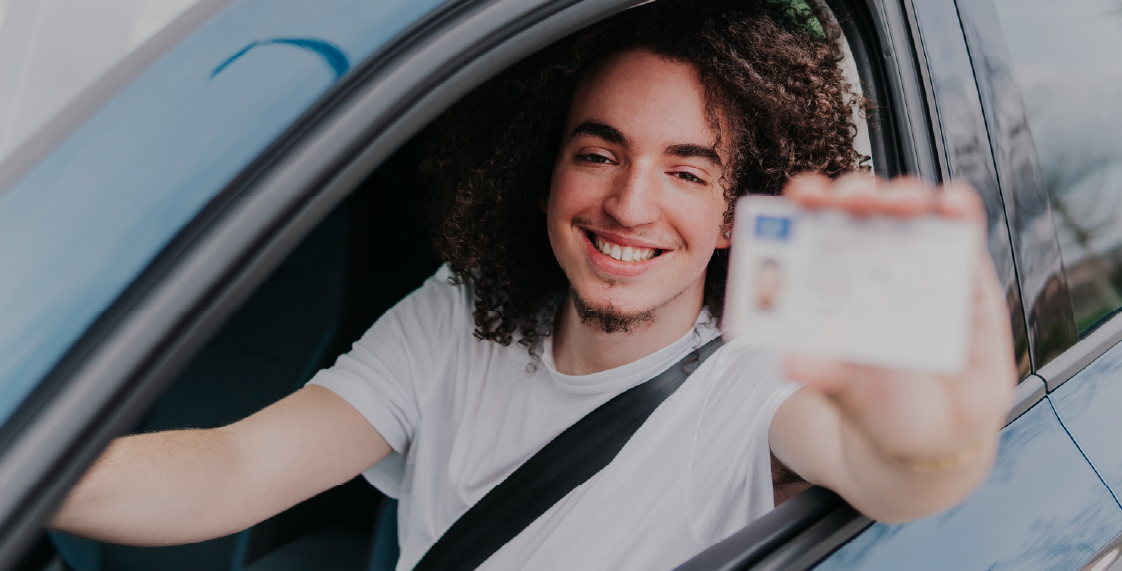
Poland Driving Licence - Know the Rules
Understand driving licence validity, exchange procedures, required documents, renewal steps, and compliance requirements for driving legally in Poland.
Read Guide
Last Updated: July 20, 2026
This content is reviewed and updated periodically to maintain accuracy and relevance.
