
LITHUANIA DRIVING LICENCE
Lithuania Driving Licence - Know the Rules
Drive legally in Lithuania with the correct driving licence and valid documents. Understanding licence validity, exchange rules, driver categories, medical checks, and compliance requirements is important for private and professional drivers, as well as foreign licence holders.
Learn about Lithuania’s driving licence rules, licence exchange procedures, validity periods, required documents, renewal process, professional driver requirements, and country-specific guidance before driving in Lithuania.
- Licence Validity in Lithuania
- Driving Licence Exchange Rules
- Required Documents & Renewal
- Professional Driver Compliance

Driving Licence in Lithuania: How to Get or Exchange One
Driving in Lithuania is straightforward once you know the rules, but the licence side trips up a lot of newcomers and professional drivers, so it pays to get it right before you get behind the wheel.
The short version: visitors and new residents can usually drive on a valid foreign licence for one year, after which residents exchange it for a Lithuanian one through the state enterprise Regitra. Whether you need a test depends on where your licence was issued. Professional drivers in categories C, CE and D face extra medical and CPC requirements. If you are a driver, you can browse driver vacancies in Lithuania or register a driver profile.
How the Lithuanian licence system works
Lithuania’s driving licences are run by the state enterprise Regitra, and the country is an EU member, so its licence follows EU Directive 2006/126/EC. That means the categories, the credit-card biometric format and the validity periods broadly match the rest of Europe. Regitra handles both driver testing and licence issuance in Lithuania. All licence transactions — first issue, exchange, renewal — go through this authority, with current procedures and fees published on its official site at regitra.lt.
The system is document-heavy but predictable: know which route applies to you, bring the right papers, and the process is routine.
Licence categories
Lithuania uses the standard European licence categories, so the letters on your licence mean the same here as elsewhere in Europe:
- AM, A1, A2, A — mopeds and motorcycles, from light to full power.
- B — cars and light vans up to 3.5 tonnes; the everyday car licence.
- BE — a car with a heavier trailer.
- C1 and C — medium and heavy goods vehicles; C is the core lorry licence.
- CE — articulated lorries and drawbar combinations; the licence long-haul truckers need.
- D1 and D — minibuses and full buses or coaches.
- DE — a bus or coach with a heavy trailer.
The categories that matter most for professional work in Lithuania are C and CE for lorries and D for buses, each carrying a higher age limit and stricter medical requirements.
Who needs a Lithuanian licence?
Whether you need a Lithuanian licence comes down to how long you stay and what you drive. Short-term visitors can drive on a valid foreign licence within the grace period. Once you become a resident, you are generally expected to hold or exchange for a Lithuanian licence. Professional drivers working for a Lithuanian-based operator need the right vocational category regardless of nationality.
Becoming a resident triggers the exchange obligation in Lithuania, so keep an eye on the date your residence status begins.
Driving on a foreign licence — the one-year rule
An EU or EEA licence is fully recognised in Lithuania — you can drive on it and, when it expires, or you choose to, exchange it for a Lithuanian one with no test. A licence from outside the EU/EEA can be used for one year after you take up residence, after which you must exchange it or, if there is no recognition agreement, pass the Lithuanian test.
Carry your licence and, where relevant, a translation whenever you drive, since roadside checks are common.
Exchanging your foreign licence
Exchanging an EU or EEA licence in Lithuania is an administrative step: you submit your current licence, proof of residence and identity, and the authority issues a Lithuanian licence in the same categories; no test involved. For a non-EU licence, the authority checks whether Lithuania has a recognition agreement with the issuing country; if it does, you exchange without a test, and if not, you sit the theory and practical exams.
Keep copies of everything you submit; you will need the reference if you have to follow up on your application.
Documents you’ll need
For an exchange or a first Lithuanian licence, expect to provide:
- Your passport or national ID, and proof of legal residence in Lithuania.
- Your original foreign licence (with a certified translation if it is not in Latin script).
- A recent passport-style photograph to the required specification.
- A medical certificate or eyesight report where the category or your age requires one.
- The completed application form and proof of the fee.
Having documents translated and, where needed, legalised before your appointment avoids a wasted trip.
Applying from scratch
If your licence cannot be exchanged — there is no recognition agreement, or you are learning to drive for the first time — you take the Lithuanian test route. That means a theory exam on Lithuanian road rules and signs, then a practical driving test, usually after lessons with an approved instructor or driving school. You apply, pass the medical, sit theory, then practical, and the licence is issued in the category you qualified for.
Allow time for this route: between application, medical, theory and practical, first-time licensing takes longer than a simple exchange.
Fees and costs
Costs in Lithuania depend on whether you are exchanging or testing from scratch, and on the category. A straightforward exchange is typically a modest administrative fee, while a full first licence adds the theory and practical test fees, driving-school lessons and the medical. Professional categories cost more because of the extra medical and CPC steps.
Budget for the full picture — application, tests, lessons and medical — not just the headline licence fee, and check current amounts at regitra.lt.
Validity and renewal
A Lithuanian car (category B) licence is normally valid for 10 years. Professional categories (C, CE, D, DE) are issued for shorter periods — commonly 5 years — and are tied to a medical, so they are renewed more often. Renewal is usually a straightforward application with an up-to-date photo and, where required, a medical or eyesight check.
Keep your address up to date with the authority so your renewal reminder and new card reach you.
The International Driving Permit
An International Driving Permit (IDP) is a recognised translation of your national licence, not a licence in itself. For driving in Lithuania, an IDP is useful — sometimes required — if your licence is not in Latin script or not from a country Lithuania recognises directly. Lithuania honours the 1968 Vienna Convention, so an IDP issued under it is accepted alongside your home licence.
For short visits, an IDP plus your national licence is often all you need; for residence, you still exchange in the normal way.
Requirements for professional truck drivers
To drive lorries professionally in Lithuania, you hold C or CE, and for buses or coaches, D or D1. These categories all add a raised minimum age, a stricter medical standard, and a certificate of professional competence.
Professional lorry and bus drivers need the Driver Certificate of Professional Competence (Driver CPC) on top of the vocational licence. Under EU Directive 2003/59/EC, that means an initial qualification plus 35 hours of periodic training every five years, recorded as code 95 on the licence or on a separate Driver Qualification Card. A CPC earned in any EU or EEA country is valid in Lithuania.
Employers will expect the vocational licence, valid CPC and a tachograph card in place before you take on regulated driving work.
Traffic laws and road rules
Traffic in Lithuania drives on the right. Speed limits are broadly 50/90/130 km/h, lower for heavy vehicles and in poor conditions. The blood-alcohol limit is 0.04%, with 0.00% for professional and new drivers. Seatbelts are compulsory, using a hand-held phone while driving is an offence, and daytime running or dipped headlights may be required. As a professional or newly qualified driver, you are usually held to the stricter alcohol limit.
Signs and priority rules can differ from home in small but important ways, so a quick read of the Lithuanian highway rules is worthwhile.
Penalties for driving without a valid licence
Driving without a valid licence in Lithuania — whether because you never held one, let a foreign licence run past the grace period, or drove a category you are not entitled to — brings fines, possible vehicle impoundment, and points or endorsements against your record. For professional drivers, the stakes are higher: driving commercially without the correct category or a valid CPC can cost your job and expose the operator to penalties too.
If in doubt about whether your entitlement still covers you, check with the authority before you drive rather than risk it.
For professional drivers in Lithuania
For professional drivers, Lithuania is one link in a wider European network, and the practical questions are the same everywhere: the right licence category, a valid CPC, a tachograph card, and an employer who has the paperwork in order. If you are looking for work, you can browse current driver vacancies in Lithuania, and if you are building a career across borders, keeping your CPC and medical current keeps you employable throughout the EU and beyond.
Employers hiring in Lithuania can post roles and manage recruitment and compliance through FastDriver, and drivers can register a profile to be matched with operators running Lithuanian routes.
Driving licence offices by Lithuanian region
Regitra has offices across its 10 regions, and you apply where you live. Here is where to go and what the local driving is like.
Vilnius County
The main location for licences, serving the capital region and its congested roads. Driver jobs in Vilnius County.
Kaunas County
Serves Kaunas County and its surrounding routes, from town driving to rural roads. Driver jobs in Kaunas County.
Klaipėda County
Serves Klaipėda County and the roads around it. Driver jobs in Klaipėda County.
Panevėžys County
Covers exchanges, first licences and renewals for residents of Panevėžys County. Driver jobs in Panevėžys County.
Marijampolė County
Drivers in Marijampolė County can handle their licence paperwork here. Driver jobs in Marijampolė County.
Šiauliai County
Serves Šiauliai County and its surrounding routes, from town driving to rural roads. Driver jobs in Šiauliai County.
Telšiai County
Serves Telšiai County and the roads around it. Driver jobs in Telšiai County.
Tauragė County
Covers exchanges, first licences and renewals for residents of Tauragė County. Driver jobs in Tauragė County.
Alytus County
Drivers in Alytus County can handle their licence paperwork here. Driver jobs in Alytus County.
Utena County
Serves Utena County and its surrounding routes, from town driving to rural roads. Driver jobs in Utena County.
Related guides
- EU driving licence — overview
- Lithuania work permit
- Lithuania residence permit
- Health insurance in Lithuania
Official government sources
- Regitra — the licensing authority.
- Ministry of Transport and Communications
- Lithuanian Transport Safety Administration — road rules and safety.
Information only — not legal advice. Licence, exchange, and professional-driver rules can change. Always confirm current requirements with Regitra before you apply.
FAQs About Lithuania Driving Licence
Get clear, accurate answers to the most common questions about getting, exchanging, and renewing a driving licence in Lithuania.- Can I drive in Lithuania with my foreign licence?
- When do I have to exchange my licence?
- Do I need to take a test to exchange?
- Who issues Lithuanian driving licences?
- What documents do I need to exchange?
- How long does an exchange take in Lithuania?
- How much does a Lithuanian licence cost?
- What licence do truck drivers need in Lithuania?
- What is the CPC?
- Do I need a medical examination in Lithuania?
- Do I need an International Driving Permit for Lithuania?
- How long is a Lithuanian licence valid?
- What happens if I drive without a valid licence in Lithuania?
- What are the main traffic rules in Lithuania?
- Where do I apply officially in Lithuania?
- Is my EU licence valid in Lithuania?
- What is the minimum age to drive a car in Lithuania?
- What is the minimum age for a truck licence in Lithuania?
- What is the minimum age for a bus licence in Lithuania?
- Which side of the road does Lithuania drive on?
- What is the blood-alcohol limit in Lithuania?
- What are the speed limits in Lithuania?
- Do professional drivers face a lower alcohol limit in Lithuania?
- What is category B?
- What is category BE?
- What is the difference between C and CE?
- What is category D1?
- Do I need a tachograph card in Lithuania?
- What is code 95?
- Is a CPC from another EU country valid in Lithuania?
- How often do I renew my CPC in Lithuania?
- Can I exchange my licence without a test in Lithuania?
- What if my country has no exchange agreement with Lithuania?
- Do I need a translation of my licence for Lithuania?
- Can I drive while my exchange is being processed in Lithuania?
- How do I renew my Lithuanian licence?
- Do older drivers face extra checks in Lithuania?
- Is the Lithuanian licence recognised elsewhere in Europe?
- Can I use a non-EU licence in Lithuania?
- What does the Lithuanian licence card look like?
- Do I need lessons to take the Lithuanian test?
- What is on the Lithuanian theory test?
- Can I convert a motorcycle licence in Lithuania?
- Do I need my licence with me when I drive in Lithuania?
- What if my licence is lost or stolen in Lithuania?
- Are there penalty points in Lithuania?
- Can my licence be suspended for drink-driving in Lithuania?
- Do I need insurance as well as a licence in Lithuania?
- Where can I find driver jobs in Lithuania?
- Where do I check the latest rules for Lithuania?
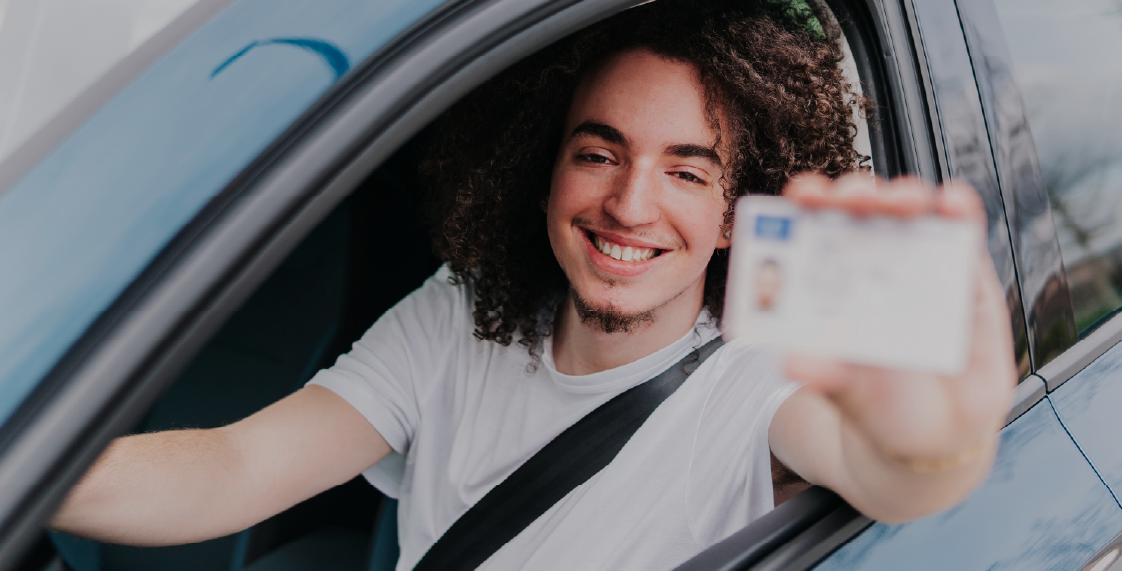
Lithuania Driving Licence - Know the Rules
Understand driving licence validity, exchange procedures, required documents, renewal steps, and compliance requirements for driving legally in Lithuania.
Read Guide
Last Updated: July 20, 2026
This content is reviewed and updated periodically to maintain accuracy and relevance.
