
ICELAND DRIVING LICENCE
Iceland Driving Licence - Know the Rules
Drive legally in Iceland with the correct driving licence and valid documents. Understanding licence validity, exchange rules, driver categories, medical checks, and compliance requirements is important for private and professional drivers, as well as foreign licence holders.
Learn about Iceland’s driving licence rules, licence exchange procedures, validity periods, required documents, renewal process, professional driver requirements, and country-specific guidance before driving in Iceland.
- Licence Validity in Iceland
- Driving Licence Exchange Rules
- Required Documents & Renewal
- Professional Driver Compliance

Driving Licence in Iceland: How to Get or Exchange One
Driving in Iceland is straightforward once you know the rules, but the licence side trips up a lot of newcomers and professional drivers, so it pays to get it right before you get behind the wheel.
The short version: visitors and new residents can usually drive on a valid foreign licence for one year, after which residents exchange it for an Icelandic one through the Icelandic Transport Authority (Samgöngustofa), with issuance via district commissioners. Whether you need a test depends on where your licence was issued. Professional drivers in categories C, CE and D face extra medical and CPC requirements. If you are a driver, you can browse driver vacancies in Iceland or register a driver profile.
How the Icelandic licence system works
Iceland’s driving licences are run by the Icelandic Transport Authority (Samgöngustofa), with issuance via district commissioners, and the country is part of the EEA. Hence, its licence follows the EU model under Directive 2006/126/EC. That means the categories, the credit-card biometric format and the validity periods broadly match the rest of Europe. As an EEA member, Iceland uses the EU licence and CPC; note there are no motorways and gravel roads are common outside towns. All licence transactions — first issue, exchange, renewal — go through this authority, with current procedures and fees published on its official site at samgongustofa. is.
The system is document-heavy but predictable: know which route applies to you, bring the right papers, and the process is routine.
Licence categories
Iceland uses the standard European licence categories, so the letters on your licence mean the same here as elsewhere in Europe:
- AM, A1, A2, A — mopeds and motorcycles, from light to full power.
- B — cars and light vans up to 3.5 tonnes; the everyday car licence.
- BE — a car with a heavier trailer.
- C1 and C — medium and heavy goods vehicles; C is the core lorry licence.
- CE — articulated lorries and drawbar combinations; the licence long-haul truckers need.
- D1 and D — minibuses and full buses or coaches.
- DE — a bus or coach with a heavy trailer.
The categories that matter most for professional work in Iceland are C and CE for lorries and D for buses, each carrying a higher age limit and stricter medical requirements.
Who needs an Icelandic licence?
Whether you need an Icelandic licence comes down to how long you stay and what you drive. Short-term visitors can drive on a valid foreign licence within the grace period. Once you become a resident, you are generally expected to hold or exchange for an Icelandic licence. Professional drivers working for an Icelandic-based operator need the right vocational category regardless of nationality.
Becoming a resident triggers the exchange obligation in Iceland, so keep an eye on the date your residence status begins.
Driving on a foreign licence — the one-year rule
An EU or EEA licence is fully recognised in Iceland — you can drive on it and, when it expires, or you choose to, exchange it for an Icelandic one with no test. A licence from outside the EU/EEA can be used for one year after you take up residence, after which you must exchange it or, if there is no recognition agreement, pass the Icelandic test.
Carry your licence and, where relevant, a translation whenever you drive, since roadside checks are common.
Exchanging your foreign licence
Exchanging an EU or EEA licence in Iceland is an administrative step: you submit your current licence, proof of residence and identity, and the authority issues an Icelandic licence in the same category, with no test involved. For a non-EU licence, the authority checks whether Iceland has a recognition agreement with the issuing country; if it does, you exchange without a test, and if not, you sit the theory and practical exams.
Keep copies of everything you submit; you will need the reference if you have to follow up on your application.
Documents you’ll need
For an exchange or a first Icelandic licence, expect to provide:
- Your passport or national ID, and proof of legal residence in Iceland.
- Your original foreign licence (with a certified translation if it is not in Latin script).
- A recent passport-style photograph to the required specification.
- A medical certificate or eyesight report where the category or your age requires one.
- The completed application form and proof of the fee.
Having documents translated and, where needed, legalised before your appointment avoids a wasted trip.
Applying from scratch
If your licence cannot be exchanged — there is no recognition agreement, or you are learning to drive for the first time — you take the Icelandic test route. That means a theory exam on Icelandic road rules and signs, then a practical driving test, usually after lessons with an approved instructor or driving school. You apply, pass the medical, sit theory, then practical, and the licence is issued in the category you qualified for.
Allow time for this route: between application, medical, theory and practical, first-time licensing takes longer than a simple exchange.
Fees and costs
Costs in Iceland depend on whether you are exchanging or testing from scratch, and on the category. A straightforward exchange is typically a modest administrative fee, while a full first licence adds the theory and practical test fees, driving-school lessons and the medical. Professional categories cost more because of the extra medical and CPC steps.
Budget for the full picture — application, tests, lessons and medical — not just the headline licence fee, and check current amounts at samgongustofa. is.
Validity and renewal
An Icelandic car (category B) licence is normally valid for 15 years (to age 65). Professional categories (C, CE, D, DE) are issued for shorter periods — commonly 5 years — and are tied to a medical, so they are renewed more often. Renewal is usually a straightforward application with an up-to-date photo and, where required, a medical or eyesight check.
Keep your address up to date with the authority so your renewal reminder and new card reach you.
The International Driving Permit
An International Driving Permit (IDP) is a recognised translation of your national licence, not a licence in itself. For driving in Iceland, an IDP is useful — sometimes required — if your licence is not in Latin script or not from a country Iceland recognises directly. Iceland honours the 1968 Vienna Convention, so an IDP issued under it is accepted alongside your home licence.
For short visits, an IDP plus your national licence is often all you need; for residence, you still exchange in the normal way.
Requirements for professional truck drivers
To drive lorries professionally in Iceland you hold C or CE, and for buses or coaches, D or D1. These categories all add a raised minimum age, a stricter medical standard, and a certificate of professional competence.
Professional lorry and bus drivers need the Driver Certificate of Professional Competence (Driver CPC) on top of the vocational licence. Under EU Directive 2003/59/EC, that means an initial qualification plus 35 hours of periodic training every five years, recorded as code 95 on the licence or on a separate Driver Qualification Card. A CPC earned in any EU or EEA country is valid in Iceland.
Employers will expect the vocational licence, valid CPC and a tachograph card in place before you take on regulated driving work.
Traffic laws and road rules
Traffic in Iceland drives on the right. Speed limits are broadly 50/80/90 km/h, lower for heavy vehicles and in poor conditions. The blood-alcohol limit is 0.05%. Seatbelts are compulsory, using a hand-held phone while driving is an offence, and daytime running or dipped headlights may be required. As a professional or newly qualified driver, you are usually held to the stricter alcohol limit.
Signs and priority rules can differ from home in small but important ways, so a quick read of the Icelandic highway rules is worthwhile.
Penalties for driving without a valid licence
Driving without a valid licence in Iceland — whether because you never held one, let a foreign licence run past the grace period, or drove a category you are not entitled to — brings fines, possible vehicle impoundment, and points or endorsements against your record. For professional drivers, the stakes are higher: driving commercially without the correct category or a valid CPC can cost your job and expose the operator to penalties too.
If in doubt about whether your entitlement still covers you, check with the authority before you drive rather than risk it.
For professional drivers in Iceland
For professional drivers, Iceland is one link in a wider European network, and the practical questions are the same everywhere: the right licence category, a valid CPC, a tachograph card, and an employer who has the paperwork in order. If you are looking for work, you can browse current driver vacancies in Iceland, and if you are building a career across borders, keeping your CPC and medical current keeps you employable throughout the EU and beyond.
Employers hiring in Iceland can post roles and manage recruitment and compliance through FastDriver, and drivers can register a profile to be matched with operators running Icelandic routes.
Driving licence offices by Icelandic region
Samgöngustofa has offices across its 8 regions, and you apply where you live. Here is where to go and what the local driving is like.
Capital Region
The main location for licences, serving the capital region and its congested roads. Driver jobs in Capital Region.
Southern Peninsula
Covers exchanges, first licences and renewals for residents of Southern Peninsula. Driver jobs in Southern Peninsula.
Southern Region
Where drivers in Southern Region handle their licence paperwork. Driver jobs in Southern Region.
Western Region
Serves Western Region and its surrounding routes, from town driving to rural roads. Driver jobs in Western Region.
Northeastern Region
Serves Northeastern Region and the roads around it. Driver jobs in Northeastern Region.
Eastern Region
Covers exchanges, first licences and renewals for residents of Eastern Region. Driver jobs in Eastern Region.
Northwestern Region
Where drivers in the Northwestern Region handle their licence paperwork. Driver jobs in Northwestern Region.
Westfjords
Serves Westfjords and its surrounding routes, from town driving to rural roads. Driver jobs in Westfjords.
Related guides
- EU driving licence — overview
- Iceland work permit
- Iceland residence permit
- Health insurance in Iceland
Official government sources
- Icelandic Transport Authority (Samgöngustofa) — the licensing authority.
- island.is (state portal)
- District Commissioners (Syslumenn) — road rules and safety.
Information only — not legal advice. Licence, exchange, and professional-driver rules can change. Always confirm current requirements with Samgoengustofa before you apply.
FAQs About Iceland Driving Licence
Get clear, accurate answers to the most common questions about getting, exchanging, and renewing a driving licence in Iceland.- Can I drive in Iceland with my foreign licence?
- When do I have to exchange my licence?
- Do I need to take a test to exchange?
- Who issues Icelandic driving licences?
- What documents do I need to exchange?
- How long does an exchange take in Iceland?
- How much does an Icelandic licence cost?
- What licence do truck drivers need in Iceland?
- What is the CPC?
- Do I need a medical examination in Iceland?
- Do I need an International Driving Permit for Iceland?
- How long is an Icelandic licence valid?
- What happens if I drive without a valid licence in Iceland?
- What are the main traffic rules in Iceland?
- Where do I apply officially in Iceland?
- Is my EU licence valid in Iceland?
- What is the minimum age to drive a car in Iceland?
- What is the minimum age for a truck licence in Iceland?
- What is the minimum age for a bus licence in Iceland?
- Which side of the road does Iceland drive on?
- What is the blood-alcohol limit in Iceland?
- What are the speed limits in Iceland?
- Do professional drivers face a lower alcohol limit in Iceland?
- What is category B?
- What is category BE?
- What is the difference between C and CE?
- What is category D1?
- Do I need a tachograph card in Iceland?
- What is code 95?
- Is a CPC from another EU country valid in Iceland?
- How often do I renew my CPC in Iceland?
- Can I exchange my licence without a test in Iceland?
- What if my country has no exchange agreement with Iceland?
- Do I need a translation of my licence for Iceland?
- Can I drive while my exchange is being processed in Iceland?
- How do I renew my Icelandic licence?
- Do older drivers face extra checks in Iceland?
- Is the Icelandic licence recognised elsewhere in Europe?
- Can I use a non-EU licence in Iceland?
- What does the Icelandic licence card look like?
- Do I need lessons to take the Icelandic test?
- What is on the Icelandic theory test?
- Can I convert a motorcycle licence in Iceland?
- Do I need my licence with me when I drive in Iceland?
- What if my licence is lost or stolen in Iceland?
- Are there penalty points in Iceland?
- Can my licence be suspended for drink-driving in Iceland?
- Do I need insurance as well as a licence in Iceland?
- Where can I find driver jobs in Iceland?
- Where do I check the latest rules for Iceland?
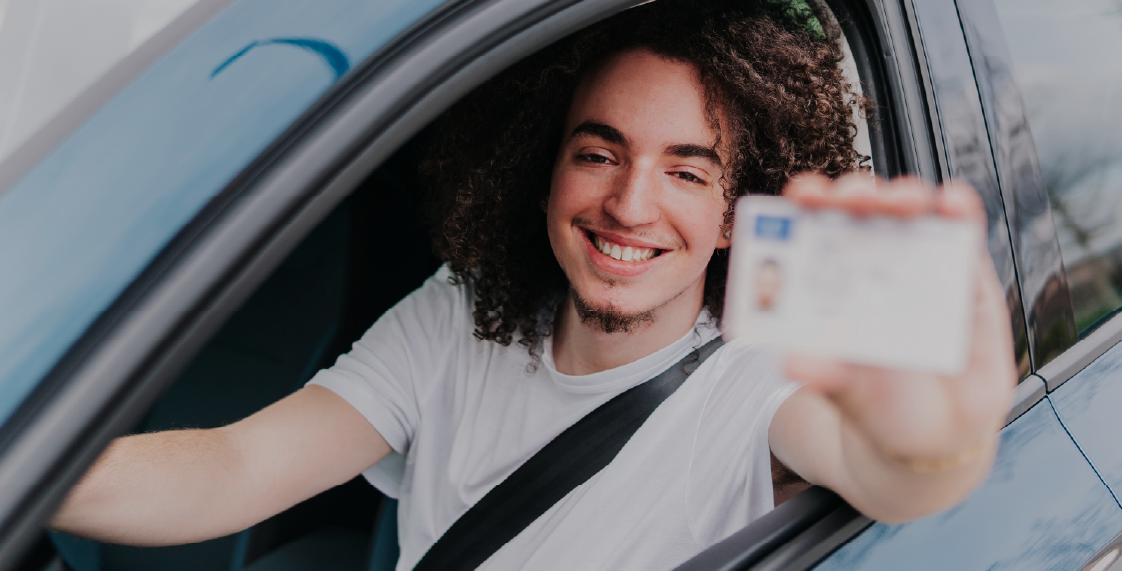
Iceland Driving Licence - Know the Rules
Understand driving licence validity, exchange procedures, required documents, renewal steps, and compliance requirements for driving legally in Iceland.
Read Guide
Last Updated: July 20, 2026
This content is reviewed and updated periodically to maintain accuracy and relevance.
