
Guide
Croatia Driving Licence Guide for Professional Drivers
Get clear, reliable information about Croatia driving licence requirements, licence conversion, training rules and legal compliance for professional drivers and transport workers.
Our guide section helps drivers, transport companies and recruiters understand Croatia’s driving licence eligibility, licence categories, required documents, and the legal process for driving professionally in Croatia and across Europe.
Whether you are applying for a new Croatia driving licence, converting a foreign licence or upgrading to truck or bus categories, this guide supports you at every stage.
- Check Croatia Driving Licence Eligibility
- Croatia Driving Licence Categories (B, C, CE, D)
- Licence Conversion for Non-EU Drivers
- Croatia Driving Regulations & Road Compliance
Introduction
Croatia joined the Schengen Area and adopted the euro on 1 January 2023, removing internal EU border friction and changing freight flows along the Adriatic coast. The Port of Rijeka has been expanding rapidly as an alternative to congested northern Adriatic ports, and Croatia’s coastal tourism creates strong seasonal demand for coach drivers.
Croatia is part of the European Union and operates a driving licence framework that complies with EU Directive 2006/126/EC. Whether you are a domestic driver building a career in road haulage, an EU national relocating to Croatia for work, or a non-EU professional looking to convert an existing licence into a recognised European credential, understanding the Croatian driving licence system is essential to operating legally and competitively on Croatian roads.
This guide explains everything professional drivers, recruiters and transport employers need to know about Croatia driving licence — categories, requirements, conversion rules for foreign licence holders, Code 95 obligations, tachograph compliance, medical standards, renewal procedures and current job opportunities. All information aligns with Croatia’s transposition of EU Directive 2006/126/EC and the relevant national legislation enforced by Ministarstvo mora, prometa i infrastrukture.
If you are an employer hiring professional drivers, you can Hire Professional Truck Drivers through FastDriver’s verified driver network. Drivers ready to work can complete Truck Driver Registration Europe to get started.
What is a Croatian driving licence?
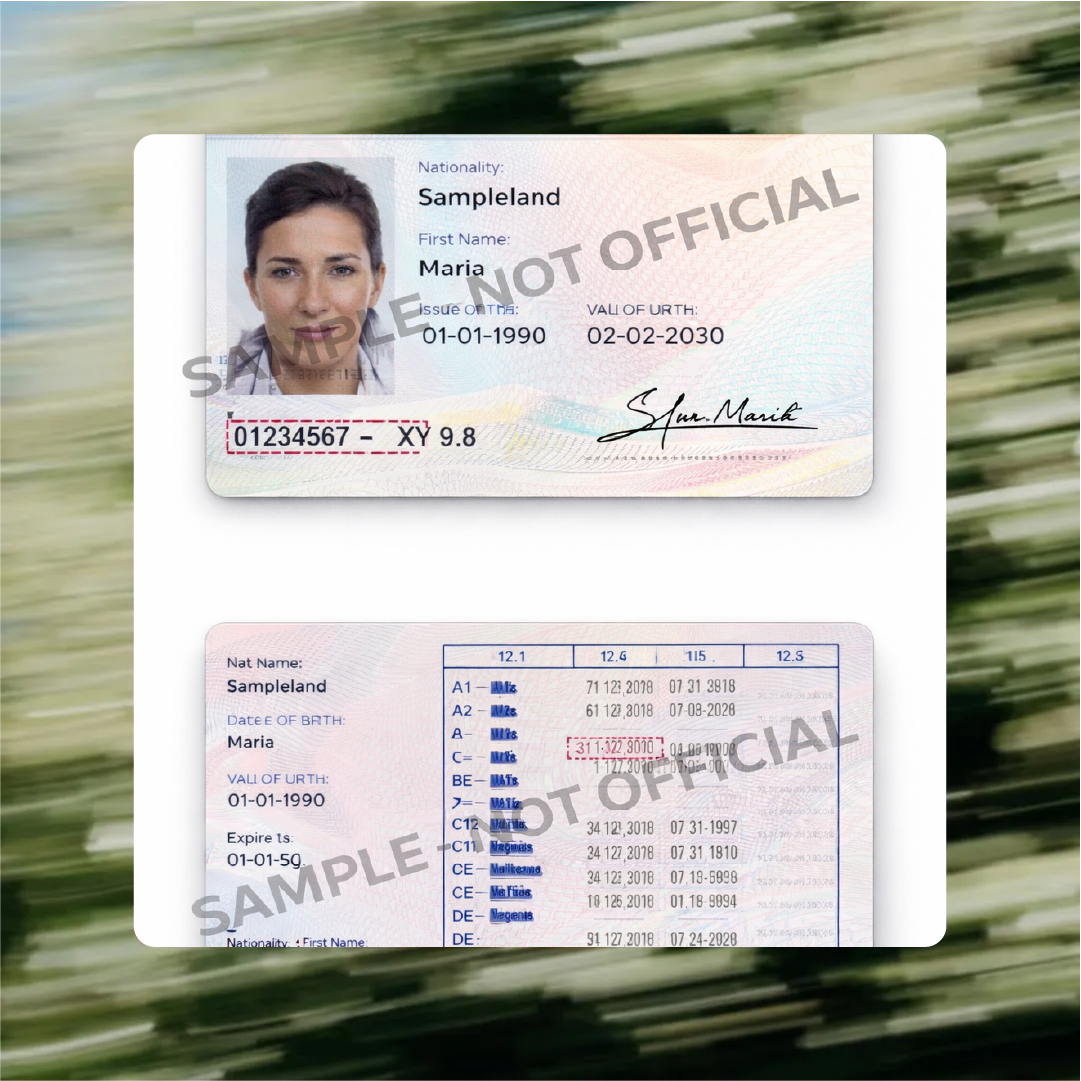
The Croatian driving licence is issued by Hrvatski autoklub (HAK) and the Ministry of the Sea, Transport and Infrastructure under the Zakon o prijevozu u cestovnom prometu and Pravilnik o stručnoj kvalifikaciji vozača. It uses the standard EU credit card format. It transposes EU Directive 2006/126/EC into national law and is fully recognised across all 27 EU member states and the EEA. For professional drivers, the Code 95 endorsement (known locally as Kvalifikacijska kartica vozača (KKV)) is either shown on the back of the licence or held on a separate Driver Qualification Card.
Croatia Driving Licence Categories at a Glance
Croatia uses the harmonised EU category system through its EU/EEA membership. The categories that matter for professional drivers are:
- Category B — standard car licence, prerequisite for all professional categories.
- Category C1 — rigid trucks 3,500–7,500 kg (urban distribution).
- Category C — rigid trucks above 3,500 kg (general haulage). Minimum age 21, or 18 with Code 95.
- Category CE — articulated combinations (long-haul). Requires Category C. Same minimum age as C.
- Category D1 — minibuses (9–16 passengers). Minimum age 21.
- Category D — full buses and coaches. Minimum age 24, or 21 with Code 95.
Category C vs CE — Quick Comparison
| Feature | Category C | Category CE |
|---|---|---|
| Vehicle type | Rigid truck only | Articulated HGV or truck + trailer |
| Trailer permitted | Up to 750 kg | Any authorised mass |
| Prerequisite | Category B | Category C |
| International haulage | Limited | Standard |
| Minimum age | 21 (18 with Code 95) | 21 (18 with Code 95) |
How to Get the Croatian Truck Driving Licence
The route to a Croatian Category C/CE licence runs through a registered driving school, a medical examination, the theory and practical tests, and licence issuance by Hrvatski autoklub (HAK). The standard EU minimum vision standards apply: visual acuity of at least 0.8 in the better eye and 0.1 in the weaker eye (with or without correction), a horizontal field of at least 160°, normal traffic-signal colour recognition and no untreated double vision. Medical reviews are repeated at every renewal and more frequently after age 65.
Practical training under the Zakon o prijevozu u cestovnom prometu and Pravilnik o stručnoj kvalifikaciji vozača covers vehicle inspections, low-speed manoeuvring, road and motorway driving and, for Category CE, coupling and reversing trailer combinations. The practical test is delivered by examiners authorised by Hrvatski autoklub (HAK) and typically lasts 60–90 minutes for Category CE.
Code 95 Integration
Holding the right driving licence category is only half of the requirement for commercial driving. All professional drivers must also hold a valid Code 95 (EU Driver CPC) under EU Directive 2003/59/EC, known locally as Kvalifikacijska kartica vozača (KKV). The Code 95 endorsement is typically shown on the back of the driving licence or on a separate Driver Qualification Card.
Code 95 requires an initial qualification followed by 35 hours of periodic training every five years. You can learn the full Code 95 Croatia eligibility rules in detail.
Croatia Licence Conversion for Non-EU Drivers
Non-EU drivers legally resident in Croatia may, in some cases, exchange their existing national driving licence for a Croatian one without sitting a full theory and practical examination. Exchange eligibility depends on whether Croatia has a bilateral recognition agreement with the country that issued the original licence.
Where no agreement exists, the foreign driver must complete the full Croatia licence acquisition process — including the theory examination, practical training and the practical driving test in a vehicle of the relevant category. To begin, register your interest through Truck Driver Registration Europe.
Tachograph & EU Driving Hours Rules
Every professional driver operating commercial vehicles in Croatia is subject to EU-wide driving hours rules under Regulation (EC) No 561/2006 and tachograph requirements under Regulation (EU) No 165/2014.
- Maximum 9 hours of driving per day (extendable to 10 hours twice per week)
- Maximum 56 hours of driving per week and 90 over two consecutive weeks
- 45-minute break required after 4.5 hours of continuous driving
- Minimum 11 hours of daily rest and 45 hours of regular weekly rest
- Regular weekly rest cannot be taken in the vehicle cab (EU Mobility Package)
For full guidance, see Check Tachograph Rules & Compliance.
Croatia Driving Licence Renewal Rules
| Category | Validity |
|---|---|
| Category B | Typically 10–15 years |
| Category C, C1, CE, C1E | 5 years |
| Category D, D1, DE, D1E | 5 years |
Professional categories must be renewed every 5 years and accompanied by a current medical certificate confirming continued fitness. Code 95 must also be renewed every five years through 35 hours of periodic training.
Croatia Truck Driver Salary Insights
Croatia has a CE driver shortage and significant emigration of qualified drivers to Germany, Austria and Slovenia. Coastal logistics, refrigerated transport for tourism resorts, and the Slavonia agricultural corridor are the main domestic employers. International operators actively recruit Croatian-licensed drivers for euro-denominated work.
The Croatian Road Transport Sector
Croatia joined the Schengen Area and adopted the euro on 1 January 2023, removing internal EU border friction and changing freight flows along the Adriatic coast. The Port of Rijeka has been expanding rapidly as an alternative to congested northern Adriatic ports, and Croatia’s coastal tourism creates strong seasonal demand for coach drivers.
Notable Employers and Operators in Croatia
Croatia Transport, Brkić Trans, Tomić Trans, Petrol Croatia (fuel logistics), Atlantic Grupa Logistics, and the Pelješac Bridge-served Adriatic operators.
Croatia Freight Market Snapshot
Schengen accession in January 2023 eliminated about 4–8 hours of border delays per truck at key crossings in Slovenia and Hungary, materially boosting Croatian operators’ competitiveness.
Industry Associations and Training Providers in Croatia
The Hrvatska gospodarska komora (HGK) road transport association and the Hrvatski autoklub (HAK) are the main industry bodies. CPC training is delivered through HAK Autoškola and a network of Ministry-approved training centres.
Cross-Border Routes from Croatia
Zagreb-Ljubljana, Rijeka-Trieste, Zagreb-Vienna, Split-Mostar and Osijek-Belgrade are central Croatian routes. The Pelješac Bridge has reduced reliance on transit through Bosnia and Herzegovina for north-south Adriatic freight.
Recent Regulatory Updates in Croatia
Schengen accession removed internal EU border checks, but Croatian operators must comply with the Mobility Package return rules. Croatian tachograph enforcement aligns with EU standards under the Ministry of Sea, Transport and Infrastructure.
Common Licence Pitfalls for Croatian Drivers
Even experienced professional drivers can fall foul of Croatia’s regulatory environment. The most common errors Hrvatski autoklub (HAK) sees are: driving a CE-class articulated vehicle on a Category C licence (a criminal offence that invalidates insurance); letting Code 95 expire while the underlying licence remains valid; missing the periodic medical examination required for professional categories; tachograph errors such as failing to insert the driver card or selecting the wrong activity mode; and overlooking country-specific extras such as first-aid certification where it is required.
Croatia Driving Licence – Requirements & Conversion Guide
Understand the official driving licence requirements for professional and private drivers in Croatia. Learn about licence eligibility, driving licence categories (B, C, CE, D), licence conversion rules for non-EU drivers, required documents and legal driving regulations before working or driving in Croatia.
This guide explains how to apply for a new Croatian driving licence, convert a foreign driving licence, upgrade to truck or bus categories and comply with Croatian and EU road transport regulations for professional drivers.
Frequently Asked Questions (FAQs)
Quick answers to the most asked questions about the Croatia driving licence, Code 95 and EU driver compliance for professional truck and bus drivers.- How long does it take to get a truck driving licence in Croatia?
- Can I drive in Croatia with a non-EU driving licence?
- Is Code 95 mandatory in Croatia?
- How much does a truck driving licence cost in Croatia?
- Can I convert my UK driving licence to a Croatian one?
- What is the minimum age to drive a truck in Croatia?
- Is a first-aid course required in Croatia?
- How often must I renew my professional licence in Croatia?
- Can I work as a truck driver in Croatia without speaking the local language?
- What happens if I lose my Croatian driving licence?
- Are there age restrictions for elderly truck drivers in Croatia?
- Can non-EU citizens work as professional drivers in Croatia?
- What is the difference between a driving school and a Code 95 training centre?
- Are tachograph fines high in Croatia?
- Do I need additional permits to transport dangerous goods in Croatia?
- Can I use my Croatian licence to drive in other EU countries?
- Will Croatia adopt the EU Digital Driving Licence?
Final Thoughts
The Croatian driving licence is a respected professional credential, supported by training standards, compliance enforcement, and full EU recognition under Directive 2006/126/EC. For domestic drivers, EU nationals relocating to Croatia, and non-EU professionals seeking opportunities in Europe, having the correct licence category and a valid Code 95 is essential for a compliant, successful career in road transport.
To recruit qualified, compliant drivers, employers can Hire Professional Truck Drivers through FastDriver. Drivers can register for opportunities or Browse Truck Driver Vacancies in Europe.
Disclaimer
This guide is provided for general informational purposes only and does not constitute legal, medical or professional advice. Croatia driving licence laws, regulations, fees and procedures are subject to change and may vary by region. Readers should consult the relevant authorities and qualified professionals before making decisions based on this content. FastDriver makes reasonable efforts to keep information accurate and updated but accepts no liability for any errors, omissions or actions taken in reliance on this guide.
Official Croatia & EU References
- Ministarstvo mora, prometa i infrastrukture — relevant national authority
- Hrvatski autoklub (HAK) and the Ministry of the Sea, Transport and Infrastructure — issuing authority
- the Zakon o prijevozu u cestovnom prometu and Pravilnik o stručnoj kvalifikaciji vozača — national legislation governing licensing
- EU Directive 2006/126/EC (driving licences) and EU Directive 2003/59/EC (Driver CPC) — https://eur-lex.europa.eu
- Regulation (EC) No 561/2006 and Regulation (EU) No 165/2014 (driving hours and tachograph) — https://eur-lex.europa.eu
- European Commission — Mobility and Transport — https://transport.ec.europa.eu
About FastDriver.eu
FastDriver.eu is Europe’s trusted platform for professional truck driver recruitment and transport compliance information. We connect verified professional drivers with reputable transport operators across all 27 EU member states, and we provide clear, practical guidance on EU driving licences, Code 95 qualification, tachograph compliance, and driver welfare. For employers, we deliver pre-vetted candidates ready to work. We provide access to opportunities across Europe and clear guidance on every aspect of professional transport regulation.
Related Driving Licence Country Guides
If you operate cross-border, you may also need the driving licence rules for Croatia’s neighbours and main trading partners:

Ready to Get Your Croatia Driving Licence?
Learn about Croatia driving licences, Code 95, CPC training and driver compliance — and connect with FastDriver to find your next professional driving opportunity in Europe.
Check Licence Requirements →
Last Updated: June 4, 2026
This content is reviewed and updated periodically to maintain accuracy and relevance.
Why FastDriver.eu ?
Our mission is to simplify truck driver recruitment across Europe.

Expanding Access
We continuously expand access to qualified, verified EU and non-EU truck drivers across Europe. By adapting to evolving transport demands and regulatory frameworks, we enable employers to secure talent efficiently and at scale.

Streamlining Recruitment
FastDriver.eu removes complexity from the hiring process by simplifying job posting, candidate shortlisting, and coordination. Our structured workflows reduce administrative effort, accelerate hiring timelines, and support informed decision-making.

People-Centered Approach
We place employers and drivers at the core of our platform. By combining industry expertise with a responsible, transparent approach, we deliver trust, reliability, and peace of mind throughout the recruitment journey.
FastDriver.eu is where truck drivers get hired:
Our job portal connects logistics companies with verified truck drivers across Europe and beyond.
5K+
Driver-job matches completed
43+
Countries and territories
200+
Hiring companies

5K+
Driver-job matches completed
43+
Countries and territories
200+
Hiring companies
Get Started with FastDriver
Our Platform
We connect truck drivers, transport companies, and recruiters across Europe through a dedicated driver job platform.

Employer
Register as a company to post truck driver jobs, manage vacancies, and connect directly with qualified professional drivers.

Drivers
Register as a driver to explore truck and commercial driving jobs across Europe and apply directly to verified employers.

Recruiters
Register as a recruiter to post driver jobs, reach active professional drivers, and support employers with fast and efficient hiring.

Trusted by Employers Across Europe

Successful hiring satisfaction

Of drivers and employers receive active support via FastDriver.eu

10+
Do you have any questions?
We support truck drivers, transport companies, and recruiters with job opportunities and driver recruitment across Europe, helping drivers find work and employers hire qualified professionals. Our job portal, FastDriver.eu, allows companies and recruiters to post driver jobs and connect directly with professional truck drivers through a simple, efficient platform.

