
Guide
Austria Driving Licence Guide for Professional Drivers
Get clear, reliable information about Austria driving licence requirements, licence conversion, training rules, and legal compliance for professional drivers and transport workers.
Our guide section helps drivers, transport companies, and recruiters understand Austria's driving licence eligibility, licence categories, required documents, and the legal process to drive professionally in Austria and across Europe.
Whether you are applying for a new Austrian driving licence, converting a foreign licence, or upgrading to truck or bus categories, this guide supports you at every stage.
- Check Austria Driving Licence Eligibility
- Austria Driving Licence Categories (A, B, C, CE, D)
- Licence Conversion for Non-EU Drivers
- Austria Driving Regulations & Road Compliance
Introduction
Austria sits at the geographic and logistical heart of Europe, making it one of the most strategically important countries for professional truck drivers, bus operators, and transport companies on the continent. Whether you are a domestic driver building a career in road haulage, an EU national relocating to Vienna or Graz for work, or a non-EU professional looking to convert an existing licence into a recognised European credential, understanding the Austrian driving licence system is essential to operating legally and competitively on Austrian roads.
This guide explains everything professional drivers, recruiters, and transport employers need to know about the Austrian driving licence — categories, requirements, conversion rules for foreign licence holders, Code 95 obligations, tachograph compliance, medical standards, renewal procedures, and current job opportunities. All information aligns with the Austrian transposition of EU Directive 2006/126/EC and the relevant national legislation enforced by Austria's Federal Ministry for Climate Action, Environment, Energy, Mobility, Innovation and Technology (BMK).
If you are an employer hiring professional drivers, you can Hire Professional Truck Drivers through FastDriver's verified driver network. Drivers ready to work can complete Truck Driver Registration Europe to get started.
What Is an Austrian Driving Licence?
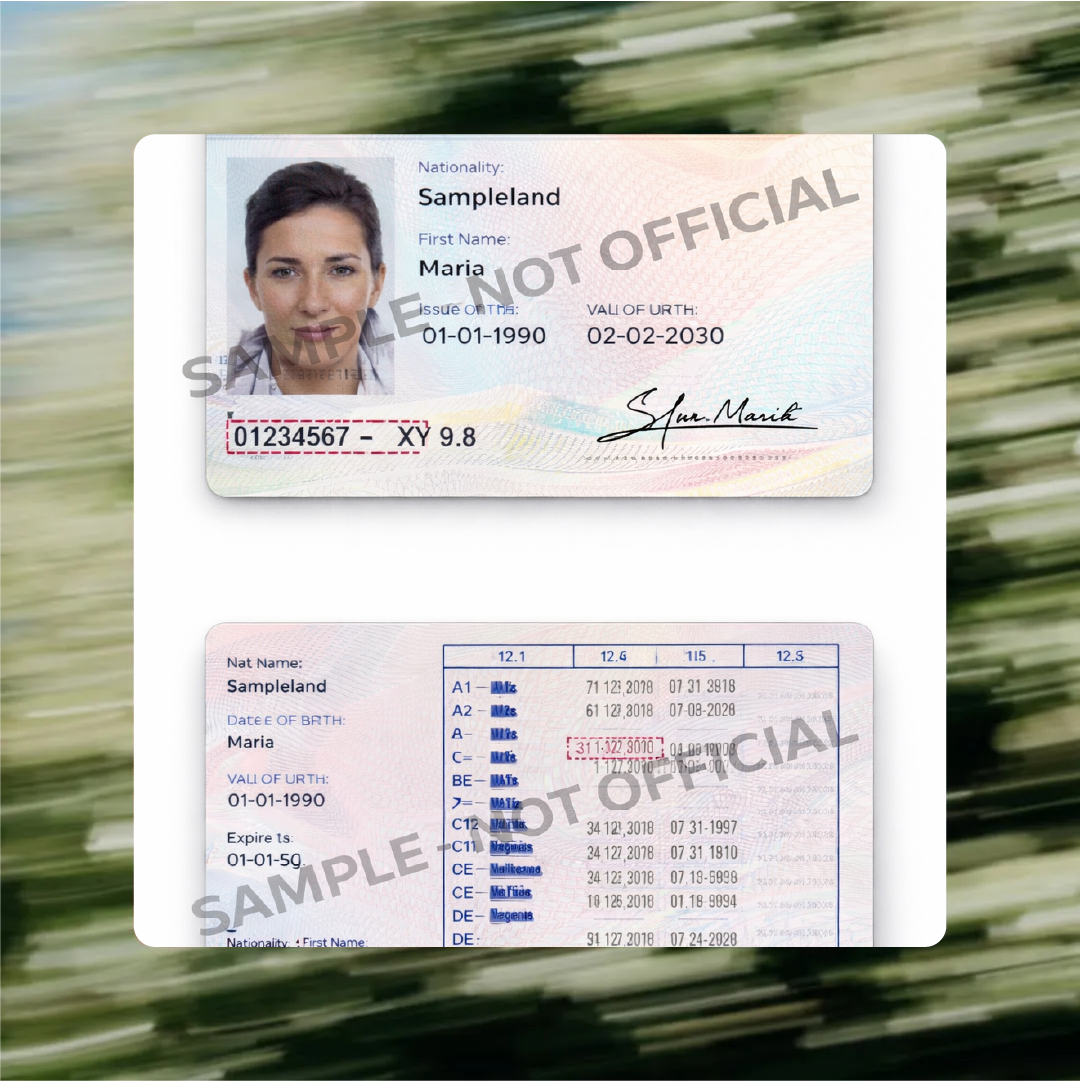
An Austrian driving licence (Führerschein) is the official authorisation document issued by Austrian regional licensing authorities (Bezirkshauptmannschaft or Landespolizeidirektion) that permits the holder to legally operate specified categories of motor vehicles on public roads. Issued in the standard EU credit-card format, the Austrian driving licence is fully recognised across all 27 EU member states and the European Economic Area countries — Iceland, Liechtenstein, and Norway.
The licence is governed by the Austrian Führerscheingesetz (FSG), which transposes EU Directive 2006/126/EC into national law. It includes harmonised category codes, a biometric photo, security features, and, where applicable, the Code 95 endorsement for professional drivers. For commercial truck and bus drivers, the Austrian driving licence is the foundational legal credential without which no commercial driving can lawfully take place, neither domestically nor on cross-border journeys.
Holding the correct category is not merely an administrative formality. It is a legal prerequisite enforced by Austrian police (Polizei) and traffic authorities through roadside inspections, tachograph downloads, and operator audits. For employers, verifying each driver's licence and Code 95 status before deployment is a mandatory compliance obligation. You can check EU Driving Licence Eligibility before starting any application or conversion process.
Austria Driving Licence Categories Explained
Austria uses the harmonised EU category system, with each licence class permitting a specific vehicle type and weight. Professional truck and bus drivers should pay close attention to the categories that apply to commercial road transport.
Category B Licence
Category B is the standard passenger car licence held by most Austrian motorists. It authorises vehicles with a maximum authorised mass (MAM) of up to 3,500 kg, carrying up to eight passengers plus the driver, and is a prerequisite for most professional categories.
- Minimum age: 18 (17 under Austria's accompanied driving scheme — L17)
- Maximum mass: 3,500 kg
- Maximum passengers: 8 plus driver
- Required before applying for Category C or D
Category C1 Licence
Category C1 covers rigid goods vehicles between 3,500 kg and 7,500 kg MAM. It is widely used for urban distribution, courier work, and light freight in Austria.
- Minimum age: 18
- Vehicle mass: 3,500–7,500 kg
- Code 95 required for commercial use
Category C Truck Licence
Category C is the principal Austrian truck licence for rigid goods vehicles with a MAM over 3,500 kg. It is the foundational HGV qualification for commercial road haulage in Austria.
- Minimum age: 21 (18 with a valid Code 95)
- Covers rigid trucks above 3,500 kg
- Category B is required as a prerequisite
- Must be combined with Code 95 for commercial driving
Category CE Licence
Category CE is the most commercially valuable Austrian truck driver licence. It authorises combinations where the towing vehicle is in Category C — covering articulated lorries, drawbar combinations, and truck-and-trailer configurations used for long-distance and international haulage.
- Minimum age: 21 (18 with Code 95)
- Covers articulated HGVs and drawbar combinations
- Requires a valid Category C
- Standard licence for international Austrian transport operations
Category D Bus Licence
Category D is the full passenger transport licence for buses and coaches designed for more than eight passengers in addition to the driver. The related Category D1 covers minibuses for 9 to 16 passengers.
- Minimum age: 24 for Category D (21 with Code 95); 21 for Category D1
- Covers full-size buses and coaches (D) or minibuses of 9–16 passengers (D1)
- Category B is required as a prerequisite
- Code 95 is required for commercial passenger transport
Austria also issues Category BEBE, which authorises Category B vehicles to tow trailers with MAM above 750 kg — useful for light commercial drivers and tradespeople, with a minimum age of 18.
Difference Between Category C and CE
The distinction between Category C and CE is one of the most practically important in the Austrian professional licensing framework. Category C authorises a single rigid truck over 3,500 kg, while Category CE extends this to vehicle combinations — articulated lorries and truck-and-trailer configurations.
| Feature | Category C | Category CE |
|---|---|---|
| Vehicle type | Rigid truck only | Articulated HGV or truck and trailer |
| Trailer permitted | Up to 750 kg | Any authorised mass |
| Prerequisite | Category B | Category C |
| Code 95 for commercial use | Yes | Yes |
| International haulage | Limited | Standard licence |
| Minimum age | 21 (18 with Code 95) | 21 (18 with Code 95) |
For drivers seeking long-distance employment with Austrian or cross-border European transport operators, the CE category remains the industry benchmark.
Austria Truck Driving Licence Requirements
To obtain an Austrian truck driver licence, applicants must satisfy several legal, medical, and training requirements set out under the Führerscheingesetz (FSG) and the Grundqualifikations- und Weiterbildungsverordnung (GWB) for professional drivers.
- Legal residence in Austria (proof of Hauptwohnsitz or Meldezettel)
- Valid passport or national identity document
- Minimum age for the category (with reduced ages for Code 95 holders)
- Valid Category B licence (prerequisite for C and D)
- Pass the Austrian medical fitness examination
- Complete approved theoretical and practical training at a registered driving school (Fahrschule)
- Pass the theory examination administered by TÜV Austria, ÖAMTC, or an authorised examination body.
- Pass the practical driving test
Required Documents
- Completed the application form from the Bezirkshauptmannschaft
- Passport-style biometric photo
- Meldezettel (registration certificate)
- Existing valid licence (Category B at minimum)
- Medical certificate (ärztliches Gutachten)
- Eye-test certificate from a qualified optometrist or ophthalmologist
- First-aid course certificate (mandatory in Austria — minimum 6 hours)
- Application fee payment confirmation
The first-aid certificate (Erste-Hilfe-Kurs) is a distinctively Austrian requirement and must be completed before the licence is issued. Once obtained, it is valid indefinitely.
Austria Medical & Vision Requirements
Professional driving licences in Austria require a more rigorous medical examination than the standard Category B licence. The medical assessment (ärztliches Gutachten) must be issued by a doctor authorised under the Führerscheingesetz.
Vision Standards
- Visual acuity of at least 0.8 in the better eye and 0.1 in the weaker eye, with or without correction
- Horizontal visual field of at least 160 degrees
- No untreated double vision (diplopia)
- Adequate colour recognition for traffic signals
- Drivers using corrective lenses must have them noted on the licence
General Medical Assessment
The Austrian medical examination assesses cardiovascular health, neurological function, hearing, mental capacity, and any conditions that may impair safe driving — including insulin-treated diabetes, epilepsy, severe sleep apnoea, and substance dependency. Drivers with chronic conditions may be granted licences with conditions or shorter validity periods requiring more frequent review.
Age-Based Medical Reviews
- At every renewal (every 5 years)
- More frequent reviews typically from age 50 onwards
- Annual reviews are commonly required from the age of 65 for Category C/CE/D holders
Austria Driving Test Process
The Austrian driving test for professional categories combines a theory examination and a practical driving assessment, both conducted in German (with translation available in some regions for the theory exam).
Step 1 — Register at an Approved Fahrschule
You must train at a driving school authorised by the BMK. The Austrian driving school network is comprehensive and includes specialist HGV training centres for C and CE categories.
Step 2 — Theory Training
Mandatory theory lessons cover Austrian road rules (Straßenverkehrsordnung — StVO), vehicle technology, EU driving hours, load securing, and category-specific operational rules.
Step 3 — Theory Examination
The theory test is computer-based and administered at the Fahrschule or an authorised centre. The pass mark is typically 80%. Candidates who fail must wait before retaking.
Step 4 — Practical Training
Minimum practical training hours for Category C and CE include vehicle inspections, low-speed manoeuvring, road driving, motorway driving, and (for CE) coupling and reversing trailer combinations. The Austrian regulation sets specific minimum hours.
Step 5 — Practical Driving Test
An examiner from TÜV Austria or a similar authorised body conducts the practical test, assessing vehicle safety checks (Abfahrtskontrolle), controlled manoeuvres, driving in traffic, and overall vehicle-handling competence. The Category CE test lasts approximately 75 minutes.
Step 6 — Licence Issuance
On successful completion of all stages and the first-aid course, the Austrian driving licence is issued by the relevant Bezirkshauptmannschaft and typically delivered within 1 to 4 weeks.
Austria Code 95 Requirements
Code 95 — the EU Certificate of Professional Competence under EU Directive 2003/59/EC — is mandatory for every professional driver operating C, CE, C1, D, D1, DE, or D1E vehicles commercially on Austrian roads. The endorsement appears on the back of the Austrian driving licence or on a separate Fahrerqualifizierungsnachweis (Driver Qualification Card / DQC).
Code 95 Initial Qualification in Austria
Austria offers two routes to an initial Code 95 qualification:
- Standard qualification: 280 hours of training, allowing entry at minimum age 18 for C/CE and 21 for D/DE
- Accelerated qualification: 140 hours, allowing entry at age 21 for C/CE and 23 for D/DE
Training must be delivered by a centre accredited by the Austrian Federal Ministry (BMK) and listed in the official register of approved Code 95 providers (anerkannte Ausbildungsstätten).
Code 95 Periodic Training in Austria
To maintain Code 95 validity, every professional driver must complete 35 hours of periodic training every 5 years, covering defensive and fuel-efficient driving, tachograph use and EU driving hours rules, load securing and freight handling, driver health and safety, customer service, and updated EU and Austrian transport law. Failure to renew Code 95 before expiry immediately disqualifies the driver from commercial operation, even where the underlying licence category remains valid. You can learn the full Austria Code 95 Eligibility requirements in detail.
Austria Driver CPC Training
Driver CPC training in Austria is delivered through accredited training centres (Ausbildungsstätten) regulated by the Federal Ministry under the GWB regulation, developing both initial professional competence and ongoing periodic compliance.
CPC training includes the modules prescribed in Annex I of EU Directive 2003/59/EC. It reflects the amending directive 2018/645, which expanded eligible content and permits a proportion of training via approved e-learning and blended learning. Core content covers rational driving based on safety regulations; the application of driving hours, tachograph, and working time rules; health, road, and environmental safety; service and logistics; and practical risk management and accident prevention.
When choosing a provider, verify that the centre is officially registered with the Austrian Federal Ministry, that instructors hold the relevant qualifications, and that the training meets the GWB curriculum. Approved providers can be found through the Austrian Chamber of Commerce (Wirtschaftskammer Österreich — WKO) transport division.
Austria Licence Conversion for Non-EU Drivers
Non-EU drivers legally resident in Austria may, in some cases, exchange their existing national driving licence for an Austrian one without sitting a full theory and practical examination. Exchange eligibility depends on whether Austria has a bilateral recognition agreement with the country that issued the original licence.
Where no agreement exists, the foreign driver must complete the full Austrian licence acquisition process — including the theory examination, practical training, and the practical driving test in a vehicle of the relevant category. ry To begin, register your interest through Truck Driver Registration Europe.
Conversion Process
- Establish legal residence in Austria (Hauptwohnsitz)
- Book an appointment with the local Bezirkshauptmannschaft or Landespolizeidirektion
- Submit the application together with the required documents
- Pass a medical and vision examination
- Complete the first-aid course (Erste-Hilfe-Kurs) if not already done
- Pay the conversion fee
- Receive the Austrian driving licence (typically within 4 to 6 weeks)
Documents Required for Conversion
- Original foreign driving licence
- Certified German translation if not issued in German or English
- Valid passport
- Meldezettel — Austrian residence registration
- Biometric photo
- Medical certificate from an Austrian-registered doctor
- Eye-test certificate
- First-aid course certificate
- Conversion fee payment
Conversion for Professional Categories (C, CE, D)
Most bilateral exchange agreements cover only Category B. Drivers seeking conversion of professional categories (C, CE, C1, D, D1) generally must complete the full Austrian process — including the Code 95 initial qualification — even if their home country issued an equivalent professional licence. This is especially relevant for non-EU drivers entering Austria's transport sector.
Countries with Austria Licence Exchange Agreements
Austria has driving licence exchange arrangements with a defined list of non-EU countries. Eligible third countries commonly include Switzerland, the United Kingdom, Norway, Iceland, Japan, South Korea, Bosnia and Herzegovina, Serbia, North Macedonia, and several others. The list is updated periodically by the BMK and should be verified directly with the Bezirkshauptmannschaft before submitting an application. Exchange agreements typically cover Category B and may not extend to professional categories such as C, CE, or D, so the scope of any agreement should always be confirmed for professional licences.
Austria Tachograph Rules & Driving Hours
Every professional driver operating commercial vehicles in Austria is subject to EU-wide driving hours rules under Regulation (EC) No 561/2006 and tachograph requirements under Regulation (EU) No 165/2014.
EU Driving Hours Limits in Austria
- Maximum 9 hours of driving per day (extendable to 10 hours twice per week)
- Maximum 56 hours of driving per week
- Maximum 90 hours of driving over any two consecutive weeks
- 45-minute break required after 4.5 hours of continuous driving (may be split into 15 + 30 minutes)
Daily and Weekly Rest
- Minimum 11 hours of daily rest (reducible to 9 hours on up to 3 occasions between weekly rests)
- Minimum 45 hours of regular weekly rest (reduced weekly rest permitted with compensation)
- Under the EU Mobility Package, regular weekly rest cannot be taken in the vehicle cab — Austrian enforcement is strict, with fines for non-compliance
Tachograph Compliance in Austria
All commercial vehicles above 3.5 tonnes operating in Austria must use an approved digital tachograph. Drivers must carry a valid driver card issued by Austrian or EU authorities, insert it before driving, correctly switch between activity modes (drive, work, availability, rest), make tachograph data available for inspection on demand, and download driver card data at least every 28 days and vehicle unit data every 90 days.
Under EU Mobility Package rules, all newly registered HGVs must be fitted with the second-generation smart tachograph (Smart Tachograph 2 / V2), which automatically records border crossings and cabotage activity. Older first-generation tachographs are being phased out across Austrian-operated international fleets, so operators should verify their vehicle compliance status. Enforcement is carried out by the Bundesamt für Verkehr and the Polizei through roadside checks and operator audits, with penalties for tachograph manipulation including fines of several thousand euros, vehicle prohibition, and consequences for operator licences. For full guidance, see Check Tachograph Rules & Compliance.
Austria Driving Licence Renewal Rules
Austrian driving licences in professional categories must be renewed periodically to remain valid.
| Category | Validity |
|---|---|
| Category B | Up to 15 years |
| Category C, C1, CE, C1E | 5 years |
| Category D, D1, DE, D1E | 5 years |
Renewal Process
- Apply at your local Bezirkshauptmannschaft before expiry
- Submit a current medical certificate (ärztliches Gutachten) confirming continued fitness
- Provide an updated biometric photo
- Pay the applicable renewal fee
- Collect or receive the renewed licence (usually within 2–4 weeks)
Code 95 must be renewed every 5 years through 35 hours of periodic training, and many Austrian drivers align this with their five-year licence renewal for convenience. Driving commercially with an expired licence or Code 95 is a serious offence in Austria — invalidating insurance, exposing the driver to fines, and potentially triggering disqualification.
Austria Professional Driver Compliance
Operating as a professional driver in Austria requires ongoing compliance across multiple regulatory domains.
- Valid Austrian driving licence in the correct category
- Current Code 95 / Driver Qualification Card
- Up-to-date medical fitness certificate
- Correct tachograph use and driver card management
- Adherence to EU driving and rest time rules
- Compliance with Austrian working time legislation (Arbeitszeitgesetz)
- Knowledge of Austrian and EU load securing standards (EN 12195)
- ADR certification for transporting dangerous goods
Austrian transport operators must verify driver credentials before deployment, manage tachograph downloads, retain records for the statutory periods, and operate in accordance with the conditions of their Gemeinschaftslizenz (Community Licence) and Austrian operator licence. For broader guidance, employers can Hire Professional Truck Drivers who already meet these standards.
Austria Truck Driver Job Opportunities
Austria's road transport sector is a major employer, supported by the country's central European geography and dense logistics corridors between Germany, Italy, Switzerland, the Czech Republic, Slovakia, Hungary, and Slovenia. Austria currently faces a significant shortage of qualified professional drivers, creating strong demand and competitive wages for qualified CE drivers with a valid Code 95.
Principal employment sectors include general road haulage and international freight, refrigerated and temperature-controlled transport (food and pharma), tanker and chemical transport, construction materials and bulk goods, automotive logistics and specialist freight, retail and e-commerce distribution, and cross-border haulage to Germany, Italy, and Central Europe. To see current openings, you can browse Truck Driver Vacancies in Europe.
Austria Truck Driver Salary Insights
Salaries for professional drivers in Austria are among the highest in the EU. As an indicative guide, Category C drivers on regional and domestic routes attract competitive monthly gross salaries with overtime and route allowances on top, while Category CE drivers in international and long-haul work command higher pay, often supplemented with daily subsistence (Diäten) for nights away from home base. Specialist roles such as ADR tanker, hazardous goods, and oversized loads carry meaningful premiums.
Actual salaries depend on the employer, route profile, experience, and any specialist endorsements. The Austrian collective agreement (Kollektivvertrag) sets minimum rates for the transport sector and is renegotiated regularly, with continued upward pressure on minimum hourly rates.
Common Licence Mistakes Drivers Make
Even experienced professional drivers can fall foul of Austria's strict regulatory environment. These are among the most frequently encountered errors.
Driving the Wrong Category
Operating a CE-class articulated vehicle on a Category C licence — or any commercial vehicle without the matching licence — is a criminal offence under Austrian law, invalidates insurance, and exposes both driver and operator to serious consequences.
Letting Code 95 Expire
Many drivers forget that their licence and Code 95 have separate renewal cycles. A valid driving licence does not authorise commercial driving once Code 95 has lapsed.
Missing Medical Renewal
Continuing to drive after a required medical certificate has expired is treated by Austrian authorities as driving without a valid licence.
Tachograph Errors and Manipulation
Failure to insert the driver card, incorrect mode selection, or attempts to tamper with the tachograph result in significant fines, vehicle immobilisation, and possible consequences for the operator's licence.
Using a Foreign Licence Beyond Its Recognised Validity
Non-EU drivers who continue to use their original national licence after the legally permitted period as new Austrian residents risk operating without a valid licence under Austrian law.
Ignoring the Erste-Hilfe-Kurs Requirement
International applicants sometimes overlook the mandatory first-aid course — an Austria-specific requirement without which the licence will not be issued.
Benefits of Holding an Austrian EU Driving Licence
Pan-European Recognition
Issued under EU Directive 2006/126/EC, an Austrian driving licence is automatically valid across all 27 EU member states and EEA countries — no conversion or re-examination needed when working internationally.
Higher Earning Potential
Austrian-trained drivers benefit from rigorous standards respected by employers across the continent. Drivers holding Austrian CE licences with Code 95 typically command premium rates in domestic and international markets.
Strong Job Market Access
The acute driver shortage across Central Europe means qualified Austrian CE holders are highly employable, with employers actively recruiting and offering relocation, sign-on bonuses, and structured career progression.
Strategic Geographic Position
Austria's central location gives drivers access to major freight corridors between Western, Eastern, and Southern Europe — maximising route variety, earning potential, and professional experience.
Professional Status and Mobility
The combination of a respected national licence, EU recognition, and Austria's high-standard training framework provides genuine career portability across Europe.
Latest Austria Transport Regulation Updates
The following updates reflect the most recent developments affecting Austrian professional drivers:
- EU Mobility Package fully in force: Mandatory return of vehicles to the country of establishment every 8 weeks, return of drivers to their homes every 3–4 weeks, and the ban on regular weekly rest in the cab are all actively enforced across Austrian operations.
- Smart Tachograph 2 (V2) rollout: All newly registered heavy commercial vehicles must use the second-generation smart tachograph. Retrofit deadlines for older vehicles continue to roll forward — Austrian operators should confirm fleet compliance.
- Driver shortage and rising wages: The collective agreement (Kollektivvertrag) for the transport sector continues to be renegotiated upward in response to the acute shortage of qualified CE drivers in Austria and across Central Europe.
- Digital licence developments: Austria, along with other EU member states, is preparing for the rollout of the EU Digital Driving Licence as part of the upcoming revision of Directive 2006/126/EC — drivers should monitor BMK announcements.
- E-learning expansion for Code 95: Following EU Directive 2018/645, more periodic training hours can now be completed via approved online and blended learning formats in Austria, giving working drivers greater flexibility.
Austria Driving Licence – Requirements & Conversion Guide
Understand the official Austrian driving licence requirements for professional and private drivers. Learn about licence eligibility, driving licence categories (A, B, C, CE, D), licence conversion rules for non-EU drivers, required documents, and legal driving regulations before working or driving in Austria.
This guide explains how to apply for a new Austrian driving licence, convert a foreign driving licence, upgrade to truck or bus categories, and comply with Austrian and EU road transport regulations for professional drivers.
Frequently Asked Questions (FAQs)
Quick answers to the most asked questions about the Austria driving licence, Code 95, CPC training, foreign licence conversion, and truck driver jobs in Austria.- How long does it take to get a truck driving licence in Austria?
- Can I drive in Austria with a non-EU driving licence?
- Is Code 95 mandatory in Austria?
- How much does an Austrian truck driving licence cost?
- Can I convert my UK driving licence to an Austrian one?
- What is the minimum age to drive a truck in Austria?
- Is the first-aid course really mandatory?
- How often must I renew my Austrian professional licence?
- Can I work as a truck driver in Austria without speaking German?
- What happens if I lose my Austrian driving licence?
- Are there any age restrictions for elderly truck drivers in Austria?
- Can non-EU citizens work as professional drivers in Austria?
- What is the difference between a Fahrschule and a Code 95 training centre?
- Are tachograph fines high in Austria?
- Do I need additional permits to transport dangerous goods in Austria?
- Can I use my Austrian licence to drive in Switzerland or the UK?
- Will Austria adopt the EU Digital Driving Licence?
Final Thoughts
The Austrian driving licence is one of Europe's most respected professional driving credentials, backed by rigorous training standards, strict compliance enforcement, and full EU recognition. For domestic drivers, EU nationals relocating to Austria, and non-EU professionals seeking opportunities in Central Europe, holding the correct licence category and a valid Code 95 is the foundation for a compliant and successful career in road transport.
Whether you are starting from scratch, converting a foreign licence, or maintaining your professional standing, the path is clear: hold the right category, complete the first-aid course, keep medical certificates and Code 95 current, follow the tachograph and driving hours rules, and renew on time. With Austria facing a sustained driver shortage, qualified CE drivers enjoy strong demand, competitive salaries, and excellent international prospects.
To recruit qualified, compliant drivers, employers can Hire Professional Truck Drivers through FastDriver. Drivers can register for opportunities or Browse Truck Driver Vacancies in Europe to take the next step.
Disclaimer
This guide is provided for general informational purposes only and does not constitute legal, medical, or professional advice. Austrian driving licence laws, regulations, fees, and procedures are subject to change and may vary by federal province. Readers should consult the relevant Austrian authorities (BMK, Bezirkshauptmannschaft, Landespolizeidirektion) and qualified professionals before making decisions based on this content. FastDriver makes reasonable efforts to keep information accurate and updated but accepts no liability for any errors, omissions, or actions taken in reliance on this guide.
Official Austria & EU References
- Austrian Federal Ministry for Climate Action, Environment, Energy, Mobility, Innovation and Technology (BMK) — https://www.bmk.gv.at
- Austrian Führerscheingesetz (RIS) — https://www.ris.bka.gv.at
- oesterreich.gv.at — Official Austrian government services portal — https://www.oesterreich.gv.at
- EU Directive 2006/126/EC and Directive 2003/59/EC (EUR-Lex) — https://eur-lex.europa.eu
- Regulation (EC) No 561/2006 and Regulation (EU) No 165/2014 (EUR-Lex) — https://eur-lex.europa.eu
- European Commission — Mobility and Transport — https://transport.ec.europa.eu
About FastDriver.eu
FastDriver.eu is Europe's trusted platform for professional truck driver recruitment and transport compliance information. We connect verified professional drivers with reputable transport operators across all 27 EU member states, offering clear, practical guidance on EU and Austrian driving licences, Code 95 qualification, tachograph compliance, and driver welfare. For employers, we deliver pre-vetted candidates ready to work. For drivers, we provide access to opportunities across Europe and straightforward guidance on every aspect of professional transport regulation.

Ready to Get Your Austria Driving Licence ?
Learn about Austria driving licences, Code 95, CPC training, and driver compliance across Europe.
Check Licence Requirements →Why FastDriver.eu ?
Our mission is to simplify truck driver recruitment across Europe.

Expanding Access
We continuously expand access to qualified, verified EU and non-EU truck drivers across Europe. By adapting to evolving transport demands and regulatory frameworks, we enable employers to secure talent efficiently and at scale.

Streamlining Recruitment
FastDriver.eu removes complexity from the hiring process by simplifying job posting, candidate shortlisting, and coordination. Our structured workflows reduce administrative effort, accelerate hiring timelines, and support informed decision-making.

People-Centered Approach
We place employers and drivers at the core of our platform. By combining industry expertise with a responsible, transparent approach, we deliver trust, reliability, and peace of mind throughout the recruitment journey.
FastDriver.eu is where truck drivers get hired:
Our job portal connects logistics companies with verified truck drivers across Europe and beyond.
5K+
Driver-job matches completed
43+
Countries and territories
200+
Hiring companies

5K+
Driver-job matches completed
43+
Countries and territories
200+
Hiring companies
Get Started with FastDriver
Our Platform
We connect truck drivers, transport companies, and recruiters across Europe through a dedicated driver job platform.

Employer
Register as a company to post truck driver jobs, manage vacancies, and connect directly with qualified professional drivers.

Drivers
Register as a driver to explore truck and commercial driving jobs across Europe and apply directly to verified employers.

Recruiters
Register as a recruiter to post driver jobs, reach active professional drivers, and support employers with fast and efficient hiring.

Trusted by Employers Across Europe

Successful hiring satisfaction

Of drivers and employers receive active support via FastDriver.eu

10+
Do you have any questions?
We support truck drivers, transport companies, and recruiters with job opportunities and driver recruitment across Europe, helping drivers find work and employers hire qualified professionals. Our job portal, FastDriver.eu, allows companies and recruiters to post driver jobs and connect directly with professional truck drivers through a simple, efficient platform.

