
Guide
Complete Bosnia and Herzegovina Truck Driver Guide for Foreign Drivers
Get clear, reliable information about Bosnia and Herzegovina truck driver jobs, the entity work permit, the annual quota, the D visa, residence with the Service for Foreigners’ Affairs and legal compliance for professional drivers.
Bosnia’s transport sector hires foreign drivers, but the quota is a hard cap, and the process runs in two stages, so this guide is honest about how it really works.
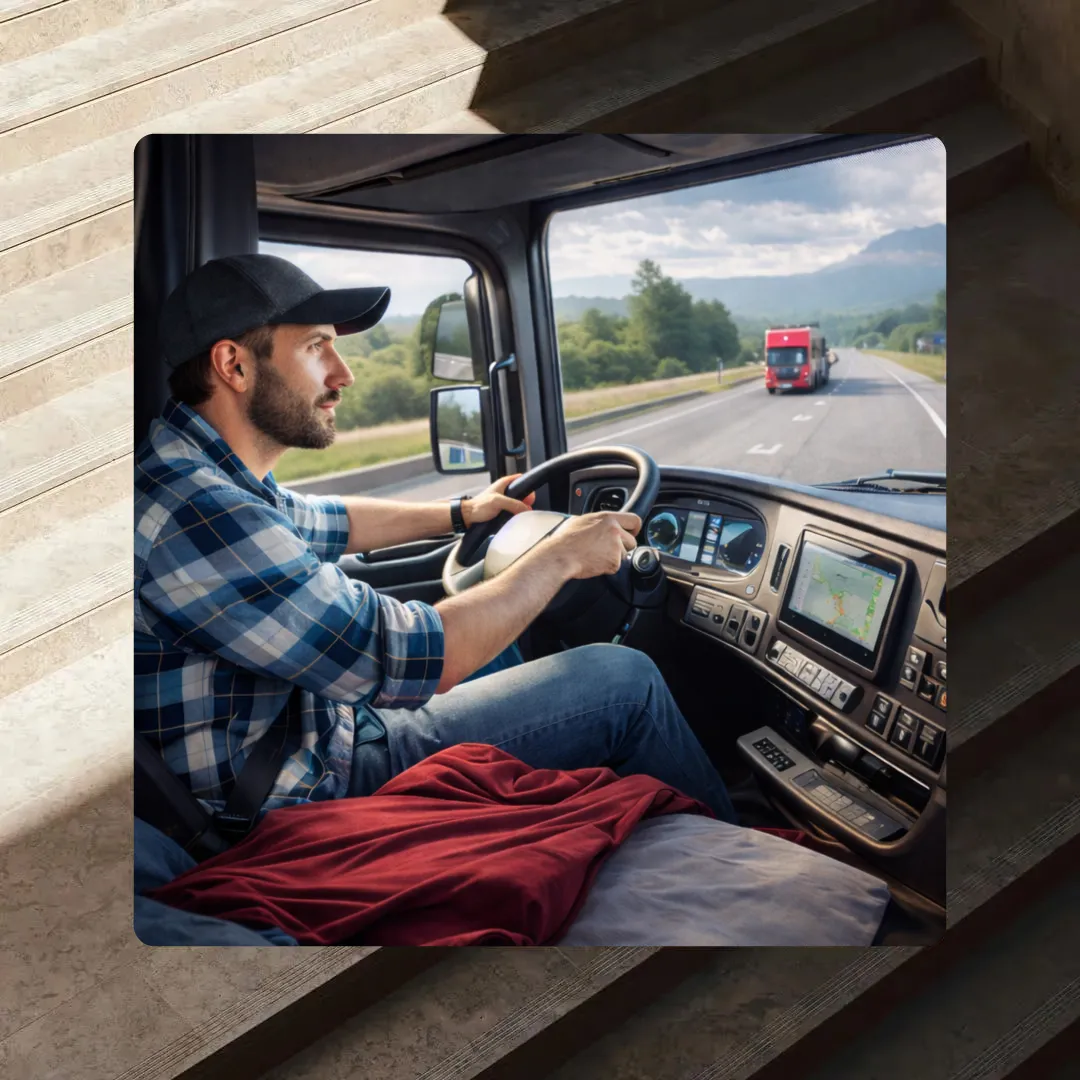
Complete Bosnia and Herzegovina Truck Driver Guide for Foreign Drivers
Bosnia and Herzegovina has a busy international haulage sector, a currency pegged to the euro and genuine demand for drivers — but it also runs one of the region’s more layered permit systems, split between the state and its two entities plus the Brčko District, and capped by a hard annual quota. This guide is honest about the bottlenecks and walks you through the route step by step.
Who Decides What: A Two-Stage System
Hiring runs in two stages. First, the work permit is issued at entity level — by the Federal Employment Bureau in the Federation, the Employment Bureau of Republika Srpska, or the Brčko District service — after a labour-market test against the unemployment registers. Second, the temporary residence permit is issued at the state level by the Service for Foreigners’ Affairs under the Ministry of Security. You need both before you drive.
The Quota Is a Hard Cap
Each year, the Council of Ministers sets a national quota of work permits, split between the entities and across sectors. Quotas and labour shortages do not guarantee a permit: when a sector’s allocation is used up, applications wait, so serious employers confirm quota space with the employment service before recruiting. Certain categories — key personnel, highly qualified specialists — sit outside the quota, but standard driving jobs are inside it.
Step by Step
The employer runs the labour-market test and obtains the work permit; you then apply for a long-stay D visa at a Bosnian embassy, travel, register your address within two days of arrival, and file the temporary residence application with the Service for Foreigners’ Affairs in good time before your visa or visa-free stay runs out. Residence is typically granted for the work-permit period plus a short margin, up to a year at a time, renewable; a change of employer means a fresh permit. Foreign documents need a certified translation into Bosnian, Croatian, or Serbian, with legalisation or an apostille.
Your Driving Licence and Professional Competence
Bosnia and Herzegovina follows its own licensing system aligned with European practice. To drive locally registered trucks, you need a Bosnian Category C or C+E licence — the exchange of a foreign licence depends on recognition rules and may involve testing. Professional drivers need the local professional competence qualification, a tachograph driver card, and a medical, with international routes subject to the AETR drivers’ hours regime. Confirm your licence path with the entity’s transport authority before committing to how this relates to EU Code 95.
Pay, Tax and Social Security
Base salaries are modest by EU standards, but international drivers earn per diem allowances on cross-border routes, where the real income lies. The convertible mark is pegged to the euro, and lawful employment brings pension and health contributions with access to the public health system. Ask for a written pay breakdown — base plus per diems — before signing.
Family and Long-Term Stay
Family members can apply for residence tied to yours once you hold a permit, and five years of continuous lawful residence can lead to permanent residence. Please keep your address registration, insurance, and renewals continuous; gaps reset the clock.
How FastDriver.eu Helps
Create a free driver profile so employers can find you and browse live roles on the vacancies page. Because the quota is a hard cap, we help you focus on employers who have confirmed quota space and ensure the process runs smoothly. This is general information, not legal advice; final decisions rest with the Bosnian authorities.
Truck Driver Jobs in Bosnia and Herzegovina: Work Permit, Quota, D Visa & Legal Requirements Guide
Complete FAQ for truck drivers who want to work in Bosnia and Herzegovina. Learn about the entity work permit, the annual quota, the D visa, residence, licence rules, taxes and long-term stay options.
Truck Driver Jobs in Bosnia and Herzegovina – Frequently Asked Questions
Bosnia and Herzegovina hires foreign drivers through a two-stage system: an entity-level work permit under a hard annual quota with a labour-market test, then a D visa and a temporary residence permit from the Service for Foreigners’ Affairs, plus a valid CE licence and local professional competence.- Can a foreign driver work as a truck driver in Bosnia and Herzegovina?
- Who issues the permits?
- Is there a quota?
- Is there a labour-market test?
- What visa do I need?
- How long are permits valid?
- What licence do I need?
- Does EU Code 95 apply?
- How is driver pay structured?
- Do I get health cover?
- What documents do I need?
- Can I change employers?
- Can my family join me, and can I settle long-term?
- How do I apply through FastDriver.eu, and where do I verify requirements?
- What should I check in a Bosnia and Herzegovina job offer before signing?
- Where can I verify the official requirements?
Official Government References
Always verify procedures, documents and timelines with the competent authorities, as rules differ between the Federation, Republika Srpska and the Brčko District: the Service for Foreigners’ Affairs under the Ministry of Security for residence (http://sps.gov.ba/); the Federal Employment Bureau (https://www.fzzz.ba/) and the Employment Bureau of Republika Srpska (https://www.zzzrs.net/) for work permits and the labour-market test; and Bosnian diplomatic missions for the D visa. All final decisions rest with the relevant authorities.

Driver Jobs in Bosnia and Herzegovina
Work with trusted Bosnian employers. Drive your career forward across Europe.
Apply for Driver Jobs Now!
Last Updated: July 6, 2026
This content is reviewed and updated periodically to maintain accuracy and relevance.
Why FastDriver.eu ?
Our mission is to simplify truck driver recruitment across Europe.

Expanding Access
We continuously expand access to qualified, verified EU and non-EU truck drivers across Europe. By adapting to evolving transport demands and regulatory frameworks, we enable employers to secure talent efficiently and at scale.

Streamlining Recruitment
FastDriver.eu removes complexity from the hiring process by simplifying job posting, candidate shortlisting, and coordination. Our structured workflows reduce administrative effort, accelerate hiring timelines, and support informed decision-making.

People-Centered Approach
We place employers and drivers at the core of our platform. By combining industry expertise with a responsible, transparent approach, we deliver trust, reliability, and peace of mind throughout the recruitment journey.
FastDriver.eu is where truck drivers get hired:
Our job portal connects logistics companies with verified truck drivers across Europe and beyond.
5K+
Driver-job matches completed
43+
Countries and territories
200+
Hiring companies

5K+
Driver-job matches completed
43+
Countries and territories
200+
Hiring companies
Get Started with FastDriver
Our Platform
We connect truck drivers, transport companies, and recruiters across Europe through a dedicated driver job platform.

Employer
Register as a company to post truck driver jobs, manage vacancies, and connect directly with qualified professional drivers.

Drivers
Register as a driver to explore truck and commercial driving jobs across Europe and apply directly to verified employers.

Recruiters
Register as a recruiter to post driver jobs, reach active professional drivers, and support employers with fast and efficient hiring.

Trusted by Employers Across Europe

Successful hiring satisfaction

Of drivers and employers receive active support via FastDriver.eu

10+
Do you have any questions?
We support truck drivers, transport companies, and recruiters with job opportunities and driver recruitment across Europe, helping drivers find work and employers hire qualified professionals. Our job portal, FastDriver.eu, allows companies and recruiters to post driver jobs and connect directly with professional truck drivers through a simple, efficient platform.

